STEAM (Science, Technology, Engineering, Arts, and Mathematics) is not an add-on or enrichment program. It is a way of teaching and learning that brings the core content of school to life. By applying knowledge across disciplines, STEAM helps learners see how numeracy, engineering, technology, creativity, and problem-solving are connected and essential in every subject and every future. This hub is a place for educators, leaders, and partners to explore how STEAM connects core learning to real-world applications and helps all Maine learners grow as critical thinkers, makers, and innovators.
STEAM in Maine
The Maine Mobile BIOLAB offers no-cost cross-curricular STEM experiences. These activities will introduce bioscience to students in Grades 5 through 8 and allow them to engage with the engineering design process.
STEAM Resources

STEAM Foundations
STEAM Foundations is a curated collection of resources designed to help educators and learners build a strong foundation in STEM through curiosity, creativity, and real-world connections.
Explore
- Preschool STEAM Series | Infant/Toddler STEAM Series
These pages provide videos and resources to explore strategies and teaching practices for supporting STEAM learning in preschoolers, with a focus on developing reasoning, creativity, problem-solving, and language and communication skills. - Resources for STEAM
This Edutopia page is a collection of teaching strategies and resources to support STEAM education. - WIDA Developing Language for Learning Mathematics
Self-paced workshop to integrate mathematics instruction and reasoning with language development for multilingual learners. A free account is required to access this resource. - Ruth's Reusable Resources
3Rs' mission is to ensure that all students, from pre-k through high school, have the basic supplies and creative tools for literacy, STEAM, and health education through the environmentally conscious distribution of donated business supplies.
Engage
- STEAM And Scientific Reasoning in Head Start
Explore resources from Headstart.gov that integrate and develop STEAM and scientific reasoning skills at an early age. - WIDA Bulletin: Scaffolding Learning for MLs in Math
WIDA Bulletin outlining specific guidance and macro-scaffolding and micro-scaffolding math practices for multilingual learners - Let's Talk, Read, and Sing about STEM
This handout explores how STEM activities are a good fit for the curious minds of preschoolers. It provides information on how STEM activities support learning, links to research, and guidance on implementing STEM with preschool children.
Apply
- MOOSE STEAM Learning Progression
MOOSE modules are purposefully designed with a strong STEAM backbone. - Go STEAM Learning Hub
Georgia Tech's STEAM learning hub features lesson plans that focus on authentic integration of STEAM in music. - STEAM PowerED Maine Instructional Design Resources
This curated list of resources is designed to support STEAM teaching and learning.
Safety
- Hazardous Waste/Universal Waste
The Maine Department of Environmental Protection (DEP) offers laws, rules, and information regarding the handling of hazardous and universal waste. - School Chemistry Laboratory Safety Guide
Safety guide for chemistry classrooms from the U.S Consumer Product Safety Commission. - America's Lab Report
An examination of laboratory experiences as part of most U.S. secondary school science curricula, including sections on lab safety and design.
STEAM Connections
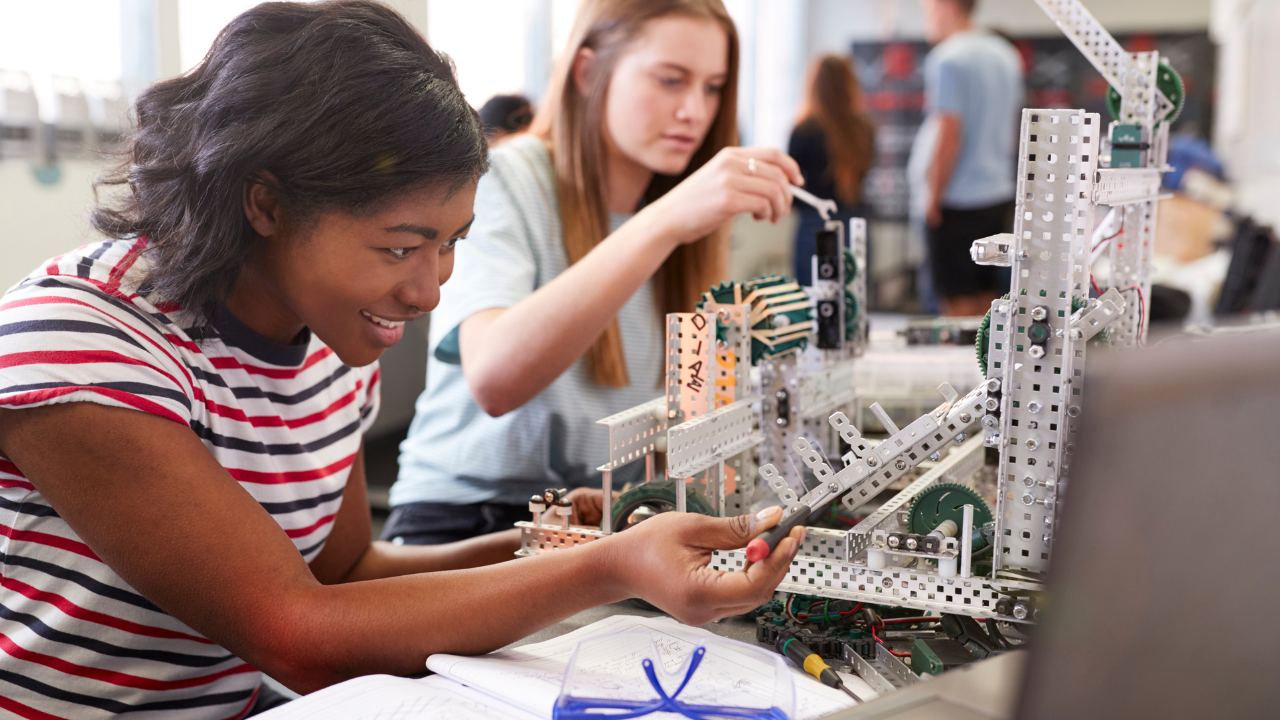
STEAM Connections is a curated collection of resources that explore the many ways STEAM connects to the world around us.
Explore
- Discover Education STEAM Career Exploration
This interactive career exploration tool supports students' understanding of STEAM-related careers. - Wabanaki STEAM Resources
Wabanaki Studies and STEAM-integrated lessons and resources. - Maine State Numeracy Hub
This resource is a dynamic, evolving space to support meaningful, relevant numeracy learning across all ages and contexts. - Maple Bytes
Maple Bytes is a Maine Department of Education–developed instructional program that invites students to explore the science and cultural significance of maple syrup through a unique blend of Wabanaki Studies, Computer Science, and Earth Science.
Engage
- Extended Learning Opportunities (ELO)
ELOs are experiences outside of the traditional classroom that emphasize community-based career exploration. - Data Science - Resources to support the use of data in STEAM
- WaterViz
WaterViz accurately reflects water movement through a small forested watershed in New Hampshire in near real time. - ARTEMIS II Interactive Tracker
This interactive NASA website shows ARTEMIS II in real time as it travels to the moon and back.
Apply
- Maine Apprenticeships
Database from the Maine Department of Labor of STEAM-related apprenticeships. - Maine Climate Literacy Plan
Framework for climate literacy in Maine, designed to build capacity and programs from interdisciplinary climate education. - Maine Climate Action Plan: A Guide
Designed to help teachers and students better understand what climate action is happening in Maine and how to be involved. - Maine Climate Office
Interactive Climate Data in Maine from the University of Maine Climate Office. - Computer Science Hub
The Computer Science Hub is a library of educator-created teaching and learning resources. - Acadia National Park Distance Learning Programs
Acadia National Park offers 30 free virtual science and art programs for students in grades 3-8.
Professional Learning, Standards, & Assessment

Professional Learning
Please check the DOE Event Calendar for upcoming Literacy Professional Learning.

Standards Review & Assessment
As part of the Maine Department of Education's commitment to supporting schools in delivering effective K-12 science and engineering instructional programs, this page provides links to resources to support the implementation of Maine's Science and Engineering standards.
Assessment
- Maine Science Assessment
Schedule:- High School: April 1-17, 2026
- Grades 5 and 8: May 11-22, 2026
- Three sessions, each 50 minutes in length for high school and each 60 minutes in length for grades 5 & 8
- MSAA Science
The Multi-State Alternate Assessment in Science, or MSAA Science, is Maine's alternate assessment for science. This assessment is administered in grades 5, 8, and 3rd year of high school and is designed for students with the most significant cognitive disabilities.
Contact
Erik Wade
Interdisciplinary Instruction Specialist
Phone: 207-441-6193
Email: Erik.Wade@maine.gov