DACF Home → Bureaus & Programs → Maine Forest Service → Forest Health & Monitoring → Forest Pest Index → Spruce Budworm in Maine
Spruce Budworm in Maine
On this page:
Spruce budworm (Choristoneura fumiferana)

Spruce budworm (SBW) populations are increasing in Northern Maine. The Maine Forest Service (MFS) is a member of the Spruce Budworm Task Force (SBWTF) and with collective input based on the research conducted under the Healthy Forests Canada and others, the Spruce Budworm Task Force determined that the Early Intervention Strategies (EIS) shown to be successful in New Brunswick would be the best strategy for the protection and health of Maine’s forests.
General Information
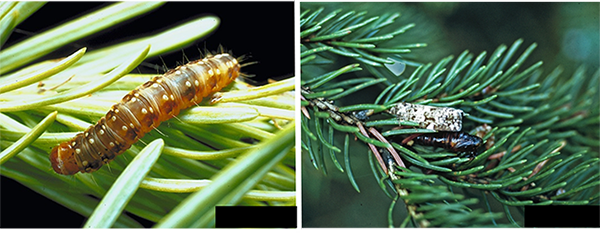
Spruce budworm (SBW) is a native moth that defoliates balsam fir and spruce trees during the larval (caterpillar) phase. SBW is capable of widespread outbreaks that can cause extensive damage and mortality to spruce-fir forests after several years of feeding. SBW populations are normally present in Maine’s forests, but outbreaks can occur roughly every 40 years.
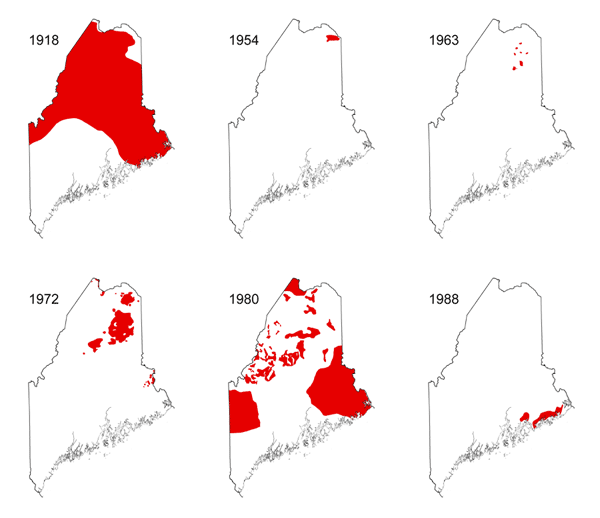
In Maine, the last SBW outbreak happened in the 1970s-1980s, where close to seven million acres of spruce and fir suffered severe damage and mortality. As a result, many trees that were dying from SBW damage were salvaged by clearcutting, a logging practice that involved cutting down most or all the trees in an area, which changed the forest landscape for the Pine Tree State for years. In addition to reduced natural resources and diminished water quality, local employment for those who rely on Maine’s forest-based economy was also impacted. Dead and dying trees provided fuel for wildfires to spread, which also reduced Maine’s air quality and resulted in drastic changes to wildlife habitat.
SPRUCE BUDWORM IN MAINE:
MODERATE OR GREATER DEFOLIATION
1918-1988
Spruce Budworm in 2026
The first step in understanding where spruce budworm populations are building is through intensive survey and monitoring. One way this is accomplished is through collecting branch samples from fir and spruce trees. During the winter, the University of Maine Spruce Budworm lab processes these branch samples and counts the number of overwintering spruce budworm larvae, otherwise known as “L2”. Those locations with more than seven L2 per sample have budworm populations growing beyond what natural enemies can help control. When larval populations are at or above this action threshold, an outbreak of SBW is likely to occur.
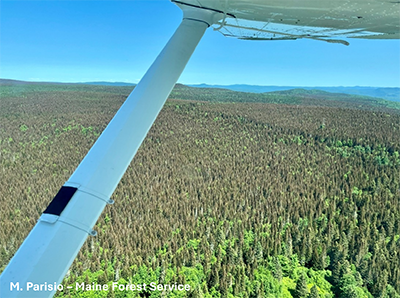
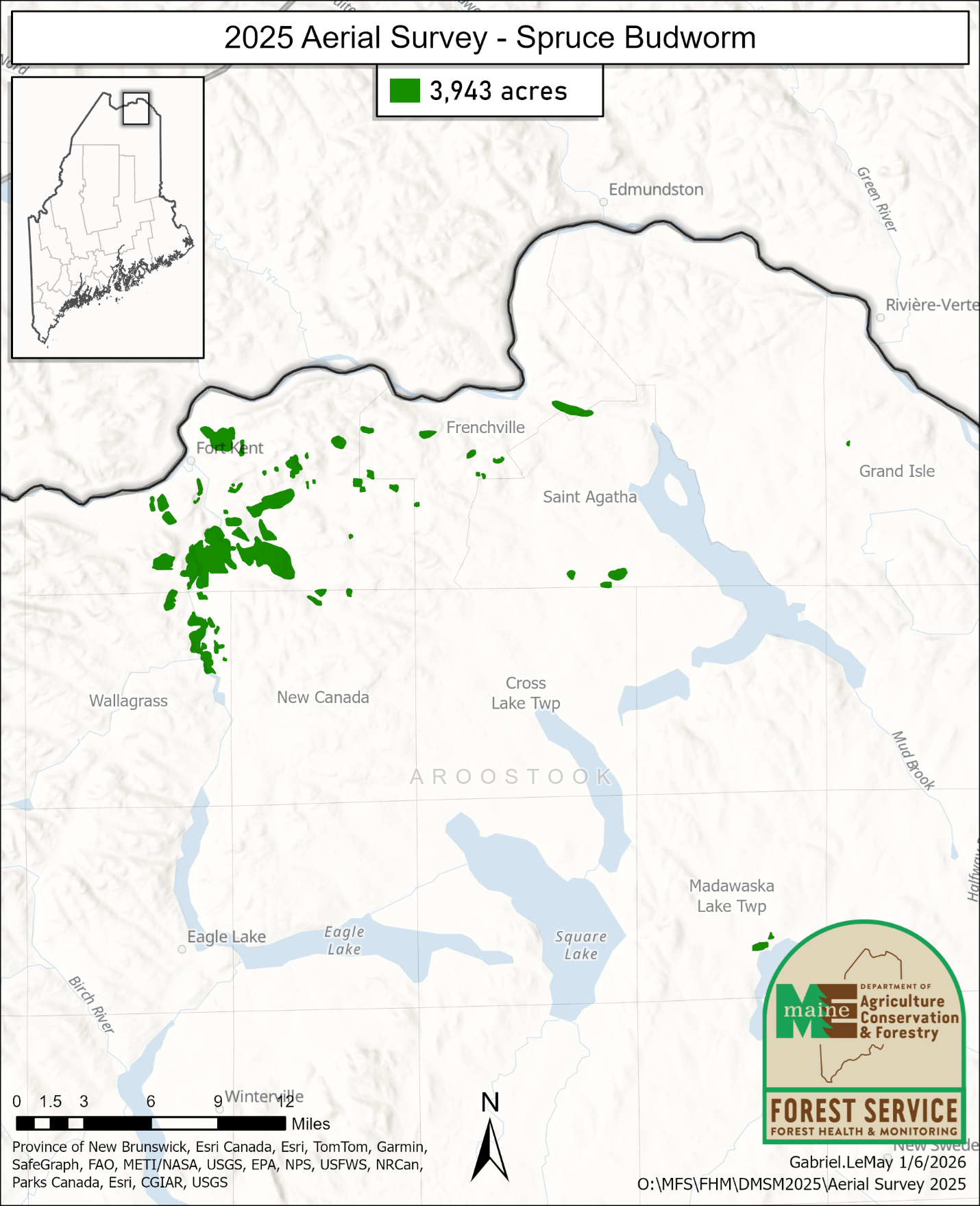
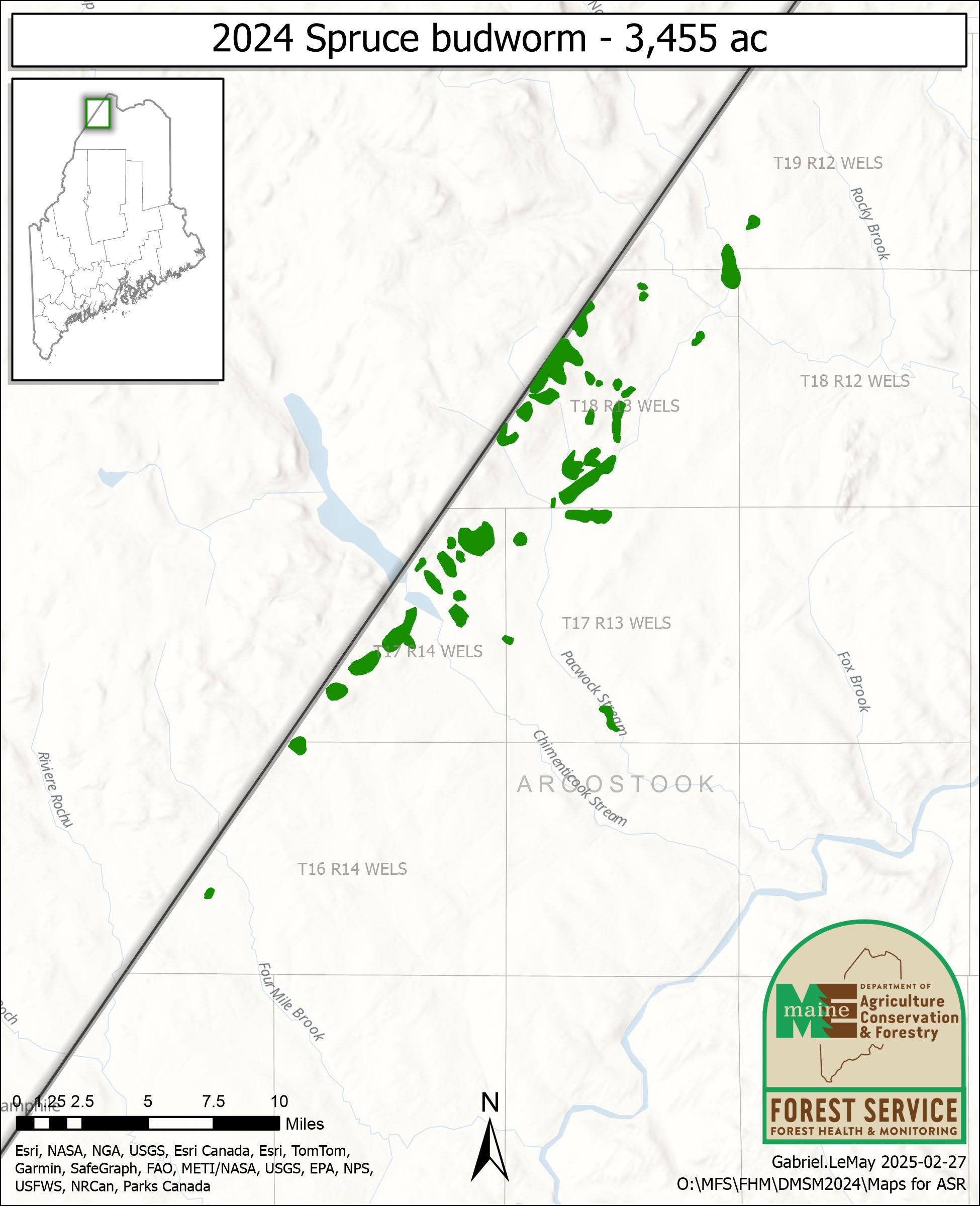
Spruce budworm is also monitored through Maine Forest Service aerial surveys. In northern Maine, roughly 3,400 acres of damage was recorded in 2024, followed by roughly 3,900 acres of damage in 2025. Following the reports of damage and elevated L2 counts in these areas, the Maine Budworm Response Coalition (MBRC) implemented an Early Intervention Strategy (EIS) to protect Maine’s forests before spruce budworm populations were expected to outbreak, or in some cases, prevent the spread of an active outbreak. Read more about the EIS efforts in “MBRC Aerial Treatment Program”.
MBRC Aerial Treatment Program
Early Intervention Strategy
The Maine Budworm Response Coalition (MBRC), comprised of timberland owners and managers in Maine, successfully advocated for emergency funding to oversee and implement the Early Intervention Strategy (EIS) methods to reduce the rising SBW populations and protect the health of our forest ecosystems and resources, maintain wildlife habitat, and prevent impacts to our forest-based economy. The main goal of EIS is to help maintain healthy trees by using targeted insecticides to reduce building spruce budworm populations early – when they are still low – instead of waiting until populations have already exploded. Any spruce budworm management across the landscape is a multi-year effort, and an EIS approach is no exception.
EIS programs use insecticides containing active ingredients tebufenozide (Mimic) or Btk (Bacillus thuringiensis kurstaki, Foray) applied by helicopter and/or fixed wing aircraft using modern technologies to ensure accurate applications. Building SBW populations may require additional aerial applications over the coming years to ensure the populations do not reach an outbreak level.
- FAQ: Tebufenozide (Mimic 2LV) (PDF)
- FAQ: Btk (Foray 76b) (PDF)
- Mimic 2LV Insecticide Label (PDF)
- Foray 76b Insecticide Label (PDF)
Aerial Treatment Program
The MBRC collaborated with the Maine Forest Service (MFS), who provided technical assistance and communications with landowners and the public regarding biology, management options, and SBW history. Additionally, the MFS provided financial oversight and reimbursement for the state and federal funds supporting the SBW response. MFS worked with landowners, scientists, the University of Maine, and other agencies to inform the MBRC where treatment was needed and how to best target those areas to reduce SBW populations below the outbreak threshold. The MBRC coordinated an Early Intervention Strategy to administer low-toxicity insecticides through an aerial spray program in 2025 and 2026.
EIS focuses on reducing spruce budworm populations before they outbreak, and can drastically reduce the amount of acres affected and subsequently reduce the cost of management in the long term. As a result, since 2025, $22 million of federal funds have been appropriated to respond to building spruce budworm populations in Maine.
- In 2025:
- Just over 240,000 acres in northern Maine with larval populations at or exceeding the outbreak threshold were targeted. $9.81 Million in federal funding was used to cover reimbursements to landowners involved in treating eligible acres.
- $500,000 was contracted with the University of Maine L2 lab to support monitoring of SBW L2 populations.
- In 2026:
- 64,905 acres in northern Maine with larval populations at or exceeding the outbreak threshold were targeted.
- MFS offered an opt-in program to small landowners in Maine as an opportunity to participate in the success in EIS in 2026. Because of that program, roughly 2,600 acres were treated on small landowner holdings.
- Approximately $447,500 in state appropriated funds will cover costs of treatments on small landowners and the Bureau of Public Lands. Approximately $5.67 Million in Federal funds will reimburse treatments on large landowner managed forests. Any remaining funds will be used to support spruce budworm treatment programs in future years.
- MFS is currently accepting additional landowners for this program. If you are interested, please fill out our landowner interest form.
Read more about the MBRC Aerial Treatment Program on the Spruce Budworm Task Force website.
See the success of the 2025 EIS treatments:
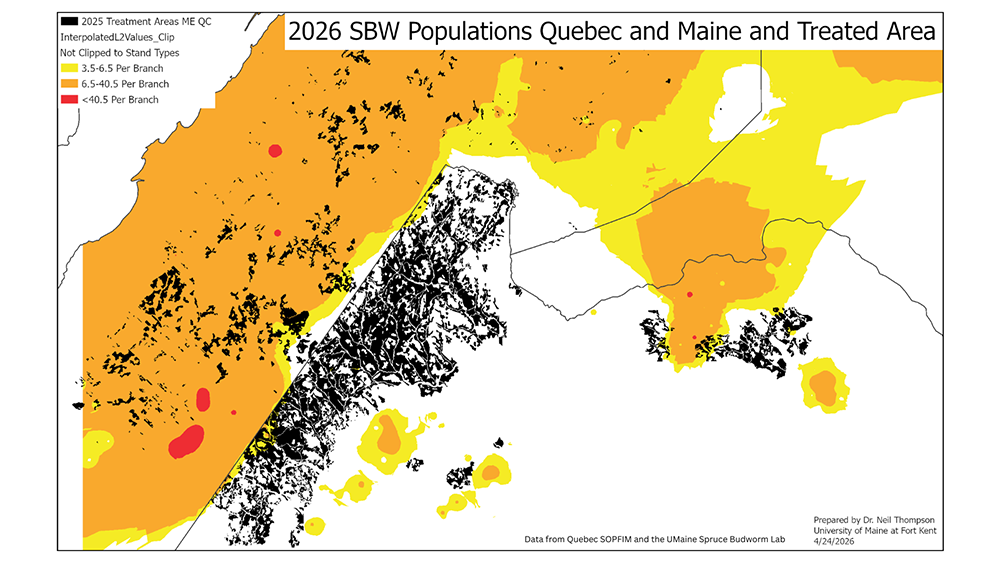
After targeted aerial applications in 2025, winter L2 surveys revealed a ~95% decrease in spruce budworm populations in treated areas, while untreated sites experienced an expected increase.
The map below shows the spruce budworm population density after treatments that occurred in 2025. In Maine, treatments prevented spruce budworm populations from reaching outbreak levels. Areas with higher SBW populations were primarily in small ownerships, which were unable to be included in 2025. In 2026, MFS created a small landowner program to allow smaller landowners the opportunity to participate in the EIS program and continue to reduce populations across the landscape.
Monitoring Programs
Pheromone Trap Maps
- 2025 Pheromone Trap Map Maine (PDF)
- 2025 Pheromone Trap Map Northeast (PDF)
- 2022 (PDF)
- 2023 (PDF)
- 2024 (PDF)
Annual Reports
- 2025 (PDF)
- 2024 (PDF)
- 2023 (PDF)
- 2022 (PDF)
- 2021 (PDF)
- 2020 (PDF)
- 2019 (PDF)
- 2018 (PDF)
- 2017 (PDF)
- 2016 (PDF)
- 2015 (PDF)
Upcoming Events