Home → Fishing & Boating → Fishing → Fishing Report
Fishing Report
Click the links below for the most up-to-date fishing news and suggestions from Maine's fisheries biologists.
Safety first! Before you head for a day of fishing, ALWAYS tell someone where you are going and when you will return. Please enjoy the Maine outdoors safely and responsibly!
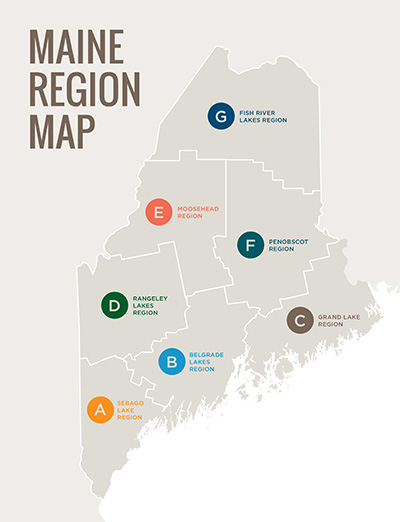
 Sebago Lake Region
From Fisheries Resource Supervisor, James Pellerin, 6/22/26
Sebago salmon fishing was reportedly good so far this season, albeit less consistent than 2025 in terms of catch and fish condition. We suspect a large number of dropdown salmon from other systems may partially explain some of the inconsistency, as well as changes in the forage fish populations. In addition, we had positive angler reports from a variety of other waters around the region including some exceptional brook trout and splake in excess of 18 inches.
Full on summer is rapidly approaching, and many southern Maine anglers stop fishing for salmonids in July and August until cooler temperatures resume in the fall. While it's not a bad idea to give salmonids a break during this hotter period, there are still some great fishing opportunities. Many of our avid brown trout and lake trout anglers think mid-late summer is one of the best times to target these species. Browns become more concentrated around the thermocline, and lake trout will typically go deep.
Best way to fish for summer browns is to target the thermocline area where it meets the bottom, which is typically around 17-25' deep depending on the water and time of year. Trolling with live bait, lures, or flies works best and the use of downriggers, lead core, or diving devices to target the correct depth is a must.
Some quality brown trout waters in the Sebago Lakes area include Square Pond, Acton; the Range Ponds, Poland; Sabbathday Lake, New Gloucester; Hancock Pond, Denmark, and Stearns Pond, Sweden. Brown trout in these waters typically range from 14" and up with some fish in the 4–6-pound range. Same techniques work for lake trout, but you'll probably want to target water in the 40-90' depth range. Some worthy lake trout waters in the region worth exploring include Sebago Lake, Windham-Naples; Thompson Lake, Otisfield; Kezar Lake, Lovell; Mousam Lake, Acton; and Auburn Lake, Auburn.
Of course, targeting warmwater species like bass, perch, pickerel, and others is a great fit for July and August and there is no shortage of waters to try—particularly if you have access to a boat. Be sure to target weedy areas and underwater structure including weed beds, sunken trees, submerged rock piles, and drop-offs. If you do not have access to a boat, the Stickey River in Standish between Rte. 114 and the river trestle has excellent shoreline access to a large area of shallow, warmwater fish habitat.
Fishing tip:
Anglers targeting cold water fish on lakes and ponds in the summer should focus their efforts in and around the thermocline and use gear that allows them to do this successfully.
Reminder:
Many of our lake trout populations are overly abundant and do not receive enough harvest, which results in poor size quality for salmonids in the system due to limited food resources. Don't feel guilty on harvesting a few fish and try some new recipes. In addition, take somebody "new" fishing and take them to fast action species to try and get them hooked!
 Belgrade Lakes Region
From Fisheries Resource Supervisor, Jason Seiders, 6/24/2026
July means warmer weather, warmer water, and mosquitoes. It's also a great month to try a float trip for bass, trout, salmon, or any variety of river dwelling fish. These are river sections that don't involve a lot of technical paddling, and they offer bank fishing opportunities for those that just want to cast from the riverbank.
Kennebec River (Fairfield, Waterville to Sidney): The Fairfield section of the Kennebec is an outstanding smallmouth bass fishery. It's very possible to catch 50 fish on a float through this section and find some bass that are 16+ inches. The Waterville to Sidney section has great smallmouth fishing, and you just might tie into a striped bass or a northern pike. Watch for breaching sturgeon on this section of the river – the numbers and sizes are impressive!
Sebasticook River (Benton to Winslow): This part of the Sebasticook is a really nice smallmouth bass fishery and it boasts the highest number of bald eagles that you'll see in Maine. This section of the Sebasticook supports a couple of invasive fish species that you might run into: northern pike and white catfish. If the water stays high, you may find a striper or two, but the Sebasticook can get pretty low in July.
Belgrade Stream (Belgrade, Mt. Vernon): This is more of a paddle than a float, but you can do it either way. This is a great spot to catch bass and tons of panfish, as well as smaller northern pike. It's a great place to take kids fishing because it's a peaceful float and there are lots of yellow perch to keep them busy. There are some really big bass here, and you'll see tons of baitfish being busted up from time to time.
Early mornings and late evenings are your best bet for most species this time of year. Most fish prefer feeding during low light periods, plus you avoid baking yourself in the hot noontime sun. If you plan to fish any sections of the upper Kennebec, morning and evening will be the times when you'll have the best fishing flows for trout and salmon. Evenings are a perfect time to fish some topwater lures for both largemouth and smallmouth bass.
 Grand Lake Region
From Fisheries Resource Biologist, Ridge Osgood, 6/22/2026
Hot weather, low flows, and deer flies: all sure signs that summer has arrived. If you ask me, there's no better place to be at this time of the year than on the water.
Where to Fish:
Rivers and streams: Prime trout fishing in Downeast streams went by quick this year. Water temperatures continue to rise as the little bit of rain we have had so far seems to have barely put a dent in recovering from last year's drought. If you are eager to put a limit of brook trout in the frying pan, luck may still be had if you can locate cold water. If you are out to catch and release, it's a good idea to bring a thermometer with you to check the water temperature. As the water reaches around 68 ̊ F, brook trout experience high levels of physiological stress. Fighting them for long periods of time or removing them from the water increases the chance of mortality under these conditions.
Lakes and ponds: Some stocked brook trout ponds may still be productive in the evenings or early mornings when water temperatures are slightly cooler and fish are more active. As our lakes get set up, trolling at deeper depths is a great way to target landlocked salmon. I'd recommend fishing Green Lake in Ellsworth, Long Pond on MDI, and West Grand Lake. The heat of the summer is a great time to target warmwater fish. If you want to hook into a few smallmouth bass, Branch Lake, Big Lake, and Third Machias Lake are good bets.
Fishing Tip:
I have found some of my favorite places to fish by studying satellite imagery and heading out to explore. I've spent many days bushwhacking into places that yielded no fish, but the successful reconnaissance missions have made it all worthwhile. Whether it's a remote section of stream, or a lake or pond you've never been to, take advantage of the good weather this time of year and get out on some adventures. You won't know unless you go.
Reminder:
As previously mentioned, brook trout are highly sensitive to high water temperatures. Temperature induced stress generally begins to occur around 68 ̊ F. As water temperatures approach 75 ̊ F, stress becomes extreme. When the water gets too warm, it's worth targeting other species to avoid unintended release mortality.
 Rangeley Lakes Region
From Fisheries Field Biologist, Tyler Grant, 6/18/26
July is when Maine's waters begin to warm, making coldwater species like trout and salmon a bit harder to find. Like us, fish seek cooler temperatures to escape the summer heat, but with a little legwork, there are still plenty of places where you can find some trout or salmon even in the middle of the summer.
Places to Go:
One option for finding some good summertime trout fishing is to climb for it. Many of our higher elevation ponds stay colder for longer and are a great July option.
If you're up for a backcountry challenge, head to Ledge Pond, located southwest of Saddleback Mountain. This remote high elevation 6-acre pond is stocked annually by plane and offers excellent fishing for brook trout, even through the summer. Access is via the Appalachian Trail north off Route 4. Look for orange flagging at the large S-turn just south of Eddy Pond. The rough trail follows the outlet stream and comes in at the southwest corner of the pond. Be careful not to come in to the southeast corner of the pond, or the steep approach will remind you why the pond is called Ledge Pond. The hike is approximately 7 miles round-trip and moderately strenuous, so come prepared with plenty of food and water.
If you still want more backcountry adventures, give Little Swift River Pond a try. It's also accessible via the Appalachian Trail, south from the rt 4 crossing. Anglers willing to take a walk can get on the AT at the parking area in Sandy River Plantation, and hike to South Pond, and then continue their hike to Little Swift River Pond. Anglers who make the 4.8 mile hike are rewarded with an excellent camping area and a cozy little pond full of wild brook trout. The trout in Little Swift River Pond are a bit smaller but make up for it with their fight and incredible colors. The pond is fly fishing only and carries an S-20 regulation. This means you can keep your general law bag limit of 5 fish, but that fish over 12 inches must be released. This regulation is meant to encourage harvest of the smaller fish while allowing the larger fish to keep growing and spawning, so don't be afraid to keep a few fish for dinner.
Anglers who are looking for a less adventurous option should try Grindstone Pond in Kingfield. This six-acre pond is easily accessible off the Tufts Pond Road in Kingfield, onto the South Grindstone Pond Road. The pond is stocked each year with brook trout, and the good growth and holdover means that there will be several year classes present, with the larger fish sometimes reaching 17". The pond is managed under general law, making it a great place to bring kids.
Fishing tip:
It's not just the heat that you need to be prepared for. Black flies, mosquitoes, and horseflies are out in full force in the Western Maine Mountains. Be sure to bring a light long sleeve shirt, hat, bug spray, and maybe even a neck gaiter/buff. These bugs can turn a day of fishing into a nightmare if unprepared.
Reminders:
With increased heat and humidity, rolling thunderstorms with high winds can pop up quickly, especially at higher elevations. Always check the forecast before heading out and keep a close eye on the sky while on the water. Be ready to seek shelter if a storm approaches and never forget your personal flotation device.
 Moosehead Region
From Fisheries Resource Biologist, Steve Seeback, 6/24/2026
The Moosehead Lake region in Maine offers outstanding and diverse fishing opportunities through mid to late summer. From the vast waters of Moosehead Lake to surrounding rivers and remote ponds, anglers can find productive waters throughout the region as conditions shift with rising temperatures.
Lake Trout (Togue)
During the summer heat, lake trout concentrate in deeper, cooler water. On waters such as Allagash Lake, Chamberlain Lake, First Roach Pond, Harrington Lake, Lobster Lake, Lower Wilson Pond, Nahmakanta Lake, Sebec Lake, and Moosehead Lake, the most consistent action is typically found in 35–50 feet of water, where fish relate to the thermocline.
Anglers are generally better off avoiding depths beyond roughly 90 feet, where lake trout tend to be smaller and less active.
Brook Trout & Landlocked Salmon
Brook trout and landlocked salmon remain most active during low-light periods, especially early morning and late evening. As surface temperatures rise during the day, these fish often retreat into cooler, deeper water.
In smaller ponds, productive depths are usually around 12–15 feet, since deeper zones can become oxygen-limited during the warmest part of the season.
Summer Hatch: Green Drake (Hex)
One of the highlights of the season is the Green Drake (Hex) hatch, which typically runs from late June through mid-July. This hatch aligns with the long days around the summer solstice, with peak activity occurring at dusk and continuing into the night.
During this brief but intense event, large mayflies emerge on many soft-bottom trout ponds across the region, often triggering aggressive surface feeding from trout, togue, and salmon. Evening dry fly fishing during this hatch is considered a must-experience opportunity for visiting anglers in Maine's North Woods.
Tailrace Fisheries
For anglers who prefer moving water, tailrace fisheries are a reliable summer option. These are river stretches located below dams or hydroelectric facilities, where released water creates oxygen-rich current and concentrates fish.
In summer, these flows are especially valuable, as many natural rivers would otherwise run too low or warm for good fishing. Notable tailrace fisheries include:
- East Outlet of the Kennebec River near Moosehead Lake
- Moose River below Brassua Dam
- West Branch of the Penobscot River below Seboomook Dam
- West Branch of the Penobscot River below Ripogenus Dam
Whether you are chasing trophy brookies during the hex hatch on one of the region's remote ponds, fishing the deep water off Mount Kineo in pursuit of the monster Moosehead togue waiting right under the thermocline, or fighting aggressive smallmouth in Sebec Lake, the Moosehead Lake region remains New England's premier summer playground.
 Penobscot Region
From Fisheries Resource Biologist, Zac Glidden, 6/19/2026
July is the perfect time to get your young ones out fishing and the Penobscot Region might just be the perfect place. This region of the State is teeming with opportunities for novice anglers to wet a line. Our Redbreast and Pumpkinseed Sunfish, often a young anglers first fish, are readily found along the shoreline of your nearest waterbody and are easily caught with worms under bobbers. For the more adventurous youths a few hours spent chasing Smallmouth Bass and Pickerel are just the ticket. An excellent location to take them is the Penobscot River, which features a world-class Smallmouth Bass fishery; the Penobscot River can be accessed in a number of areas, with public boat launches in Winn, Lincoln, Howland, Passadumkeag, Greenbush, Old Town, and Eddington. Alternatively, if a more remote day-long float for the whole family is desired, try the Passadumkeag River. This fabulous canoe trip begins at the Tannery in Lowell and ends at the IFW launch in Passadumkeag.
Anglers looking for opportunities to catch Landlocked Salmon would be rewarded by taking a trip to Pemadumcook Lake, T1 R9 WELS, T1 R10 Wels, T3 Indian Purchase, and T4 Indian Purchase; reports of fast fishing for healthy Landlocks have been coming in all spring and I expect that to continue well into the summer. The Pemadumcook Chain of Lakes can be accessed at either of the two public launches, they are located at South Twin Lake or Ambajejus Lake. Anglers are encouraged to harvest their legal catch of Landlocked Salmon when fishing at Pemadumcook Chain of Lakes. Searching for a chance at an above average sized Landlock Salmon, head to Cold Stream Pond, Enfield. Salmon captured in last fall's trap netting were in excellent shape and anglers have reported catching very healthy fish all winter and spring.
July is the time of the storied mayfly hatch on many of our Brook Trout ponds. Once in a lifetime trout fishing can be found in the evening during early July. Excellent opportunities exist for chasing the hex hatch within the southern portion of Baxter State Park. I encourage you to get out there and try a new water!
Fishing Tip:
When chasing bronzebacks remember to check your soft plastic baits regularly so that they don't fall off while casting and properly dispose of them at the end of your trip.
Reminder:
There is an important tagging project underway within the Pushaw Stream and Penobscot River drainages. Over 400 invasive Northern Pike have been tagged with numbered orange tags and should you catch one please report the fish on our website or follow this link: Fish Tag Reporting: Maine Dept of Inland Fisheries and Wildlife
 Fish River Lakes Region
From Fisheries Resource Biologist, Frank Frost, 6/26/2026
The current high water and cool weather doesn't suggest it, but Northern Maine has entered the warmer days of summer which means a different set of angling opportunities awaits in the north country. Evening fishing on trout ponds and dead waters along with brook fishing for wild trout are a major focus this time of year. Insect hatches on trout ponds in the evenings and even into darkness can be intense and brings sport fish to the surface for great fishing action. Northern Maine has an abundance of these waters scattered across Aroostook County. Wading brooks and streams has nearly become a forgotten sport in recent years, so anglers can have miles and miles of flowing water all to themselves. With the relatively wet summer and recent cool weather in June, anglers can find some great action on our brooks and streams to start the July and August time in northern Maine.
Fishing tip:
Anglers should experiment with preferred angling times and consider the very early morning on their favorite water; waters tend to cool somewhat overnight so early mornings can be productive. Low light conditions of early morning also tends to be when sport fish will be more active to avoid predation
A few suggestions for anglers this time of year:
- Salmon Brook, Washburn. Lots of parking at the Town park and an easy walk makes this a great water to wade for wild brook trout. The dam removal completed in 2013 has resulted in some great pool habitat in the old impoundment area. Wading upstream from this point, anglers can also find some great trout habitat
- Beaver Brook, T13R5 WELS. This is a large tributary to the Aroostook River. Access is off a gravel road (Beaver Brook Road) from Route 11 between Ashland and Portage. Anglers can wade up and downstream from the BBR bridge. Best areas to fish this time of year are spring holes and mouths of cool tributaries.
- St. John River, Frenchville. A modern boat launch off Route 1 a few miles north of downtown provides great access for boaters and bank anglers. here is some great pool habitat both up and downstream of the launch that can be easily fished by wading.
- Cross Lake, T16R5 WELS. There is a well-maintained boat launch off Disy Road and Route 161 north of Stockholm. This launch facility also has some bank angling opportunity off a gravel beach. Brook trout and landlocked salmon can be caught here as well as several species of non-sport fish.
Reminder:
Anglers should be aware there is a newly established population of invasive zebra mussels in the St. John River system. Zebra mussels pose a significant threat to Maine's waters, fish, and wildlife and are nearly impossible to eradicate once established. Because zebra mussel larvae are microscopic and can be transported on boats, gear, and equipment, all anglers are encouraged to practice Clean, Drain, Dry procedures every time they leave the water. Learn more about zebra mussels and the steps you can take to help prevent their spread: Zebra Mussels in Maine.