
Home → Water Quality → Programs → Wastewater Treatment
Division of Water Quality Management
17 State House Station
Augusta, ME 04333-0017
Wastewater Treatment
Wastewater Treatment Engineering
Contact:Brandy King (207) 287-6093
The Division of Water Quality Management provides technical review for municipalities planning sewer system extensions and wastewater treatment plant expansions. Title 38 MRSA Section 412-B requires the submission of plans for any new drainage systems or any sewage treatment or industrial waste disposal into waters of the State. This review is usually accomplished concurrently with Site Location review or Wastewater Discharge License review.
Technical Assistance for Municipal Wastewater Treatment Facilities
Contact: Judy Bruenjes (207) 287-7806
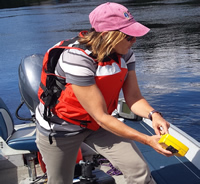
In an effort to optimize the performance of municipal and industrial wastewater treatment facilities, the Maine DEP provides technical assistance services. These services address a number of issues that arise out of the operations. Typically a team will be formed to tackle any issues hampering the facility's operation. This team typically is comprised of a DEP staff person, plant operators and administrators, and may include engineering consultants. This team approach is now used more extensively than in the past, because it builds trust and better working relationships and produces improved results. The team will work together to identify design, administrative, maintenance, and operational performance limiting factors. Once the problem has been properly identified, the team will identify possible solutions. The facility staff's extensive experience with their facility, combined with the DEP's experience with a variety of facilities, combines to form a very effective team.
The DEP can provide a variety of services depending on the needs of the individual facility. The types of assistance available include:
- Process Control
Virtually all of the wastewater treatment facilities in Maine use a combination of biological, chemical and physical processes to remove pollutants from the water. One of the most important jobs of the wastewater treatment facility operator is to control that process to maximize the efficiency of the removal of pollutants. We offer technical assistance to operators in process control troubleshooting, process contral planning and microscopic examination of mixed liquor or biofilm. - Wastewater Laboratory DMR/QC Annual Study
The Environmental Protection Agency’s (EPA) Discharge Monitoring Report - Quality Assurance (DMR-QA) program is an annual study required by all Major and selected Minor MEPDES permitted facilities under Section 308 of the Clean Water Act. DMR-QA evaluates the analytical ability of in-house laboratories to perform self-monitoring testing required by a facility’s MEPDES permit. The program helps ensure the quality of DMR analyses submitted to the Department for permit compliance. The current study can be found at EPA’s website, EPA DMR-QA.Participants are required to test a blind, Proficiency Testing (PT) sample once a year for all analytes they analyze in their in-house laboratory for permit compliance. Laboratories accredited by the Maine CDC are not required to test under the EPA DMR-QA program.
Results must fall into the “Acceptable” range, defined by performance-based limits (acceptance criteria) provided by certified Proficiency Testing (PT) providers in accordance with EPA guidelines. If any graded results are "Not Acceptable," permittees must determine the cause of the deficiency and ensure corrective action is taken to prevent future occurrences and pass a retest.
For more information, contact Brett Goodrich, DMR-QA Coordinator, Brett.A.Goodrich@maine.gov, 207-450-5590. - Secondary Clarifier Analyses
The performance of secondary clarifiers determines the overall performance of activated sludge and fixed film wastewater treatment facilities. Secondary clarifiers must trap and hold the particulate matter after the secondary biological treatment system so that the clean water can be discharged to the environment. We can help operators conduct settleability tests at their facilities and use the data collected to give them tools to use as part of their everyday operations to help insure that their clarifiers perform as efficiently as possible. - Energy Use Analysis And Energy Audits
Energy is always one of the largest expenses when running a wastewater treatment facility. Pumping water, aerating mixed liquor and dewater sludge require large amounts of electricity, much of it used around the clock every day. We can help operators at treatment facilities determine where their energy is being used and how energy use and costs can be reduced. We will also work with them and Efficiency Maine to find qualified vendors and take advantage of any financial assistance that is available. - Asset Management Tools
The wastewater treatment plant, sewers, pump stations and associated facilities are often the most valuable asset in any Maine community. These assets must be managed carefully to ensure that the life of the equipment and facilities is maximized and that services are provided at the lowest life-cycle cost. We can help operators understand asset management and use some of the free available tools to develop and implement an asset management program.- DEP Asset Management Flyer
- EPA Asset Management Website
- CUPSS website This free software was developed for EPA with very small systems in mind. CUPSS can be obtained from EPA at the link below. We can help operators set up and implement CUPSS for their systems.
- Asset Management Switchboard – The Southwest Environmental Finance Center has partnered with EPA to create a repository of documentation and tools related to Asset Management.
- POTW Staffing Requirements
The proper operation of wastewater treatment facilities relies on a reliable, well trained staff. In some cases, it is crucial to know how many people are necessary to properly operate and maintain a treatment facility. We worked with other state and private sector wastewater experts from New England and New York through the New England Interstate Water Pollution Control Commission to develop a guideline for staffing levels at wastewater treatment plants. The guideline can be downloaded from NEIWPCC. We can help operators use the Guideline and an accompanying Excel spreadsheet to determine the appropriate number of staff for their plants.
Industrial Pretreatment Program
Contact: Benjamin Pendleton (207) 592-6871
Commercial and Industrial operations may produce process wastewater streams, or discharges into a facility’s conventional wastewater stream, that are difficult or impossible to handle in a conventional wastewater treatment system. For such facilities it is necessary to obtain a permit (or permission) from the appropriate authority before commencing to discharge.
Facilities discharging to Municipal Publicly Owned Treatment Works (POTWs). For facilities that are or are proposing to discharge treated or untreated process wastewater to City, Town, or District operated POTWs, facility management shall contact the appropriate local authority to inform the Superintendent of the local treatment facility. The Superintendent will determine the POTW’s ability to accept the discharge, and under what conditions it may be accepted. In some communities in Maine there are approved local Industrial Pretreatment Programs; these communities manage their Industrial Users locally, and issue their own Industrial User permits:
Augusta (Greater Augusta Utility District), Bangor, Biddeford, Hartland, Kennebec Sanitary Treatment District (Waterville, et al.), Lewiston-Auburn (LAWPCA), Portland (Portland Water District), Rockland, Sanford, South Portland, and Westbrook (Portland Water District).
In any community served by a local wastewater utility, the facility must receive prior approval from the POTW Superintendent before discharging a process wastewater stream into the collection system. This approval may take the form of a local permit, or it may consist of another form of binding contractual arrangement with the City, Town, or District. The State Pretreatment Program, governed by the Department’s Rule 06-096 CMR Chapter 528, oversees the individual municipal programs. Additionally, it directly regulates a number of Commercial/Industrial facilities in communities that do not have approved Pretreatment Programs, and serves as a technical resource for facilities, POTWs, and communities throughout the state on regulatory and technical matters relating to industrial pretreatment.
Login to NetDMR Select Maine Department of Environmental Protection as the Regulatory Authority
If you have any questions, please contact the eDMR Administrator MaineNetDMR.DEP@maine.gov
NetDMR Support Portal (Helpdesk) User guides and other assistance available here
Network Discharge Monitoring Report (NetDMR) Tool
Contact: Brett Goodrich (207) 450-5590
The Network Discharge Monitoring Report (NetDMR) tool provides web-based technology to record and report treated waste water monitoring data. The operators of Maine’s various public and private wastewater treatment facilities are required to submit Discharge Monitoring Reports (DMRs) to the DEP. The DMR data is required to be submitted electronically to the Environmental Protection Agency. Maine facilities use the NetDMR tool to do this.
The NetDMR tool is a secure system. Any user attempting to access the system must provide a valid User ID and password. User ID and password are set up by the user through the NetDMR website.
Training on the use of NetDMR can be done online, through your Maine DEP Compliance Inspector, or by contacting the Maine DEP NetDMR contact.
Pollution Prevention Assistance
Contact: Gregg Wood (207) 287-7693
In an effort to optimize the performance of municipal and industrial wastewater treatment facilities, the Maine DEP provides Pollution Prevention services to municipal and industrial facilities. Pollution Prevention is the concept of preventing the pollution before it is created in the first place. Typically a team will be formed to identify any opportunities to increase the efficient use of chemicals and energy throughout the treatment facility. In addition, the team will look for any opportunities to reduce pollution either throughout the municipality or the industry. This team typically is comprised of a DEP staff person, plant operators and administrators, and may include engineering consultants. This team approach is now used more extensively than in the past, because it builds trust and better working relationships and produces improved results. The team will work together to identify pollution prevention opportunities. Once the problem has been properly identified, the team will identify possible solutions. The facility staff's extensive experience with their facility, combined with the DEP's experience with a variety of facilities, combines to form a very effective team.
Supplemental materials
Liquid Assets - The Story of Our Water Infrastructure (off-site)
Guideline for Developing Wet Weather Management Plans and Operation Practices at Publicly Owned Wastewater Treatment Facilities (pdf file)
- Appendix E. Wet Weather Operating Plan Development Worksheets (msword)
- Appendix F. Wet Weather Operating Plan Template Sheets (msword)
State Revolving Loan Fund and DEP Municipal Construction Grants Program
O&M Newsletter