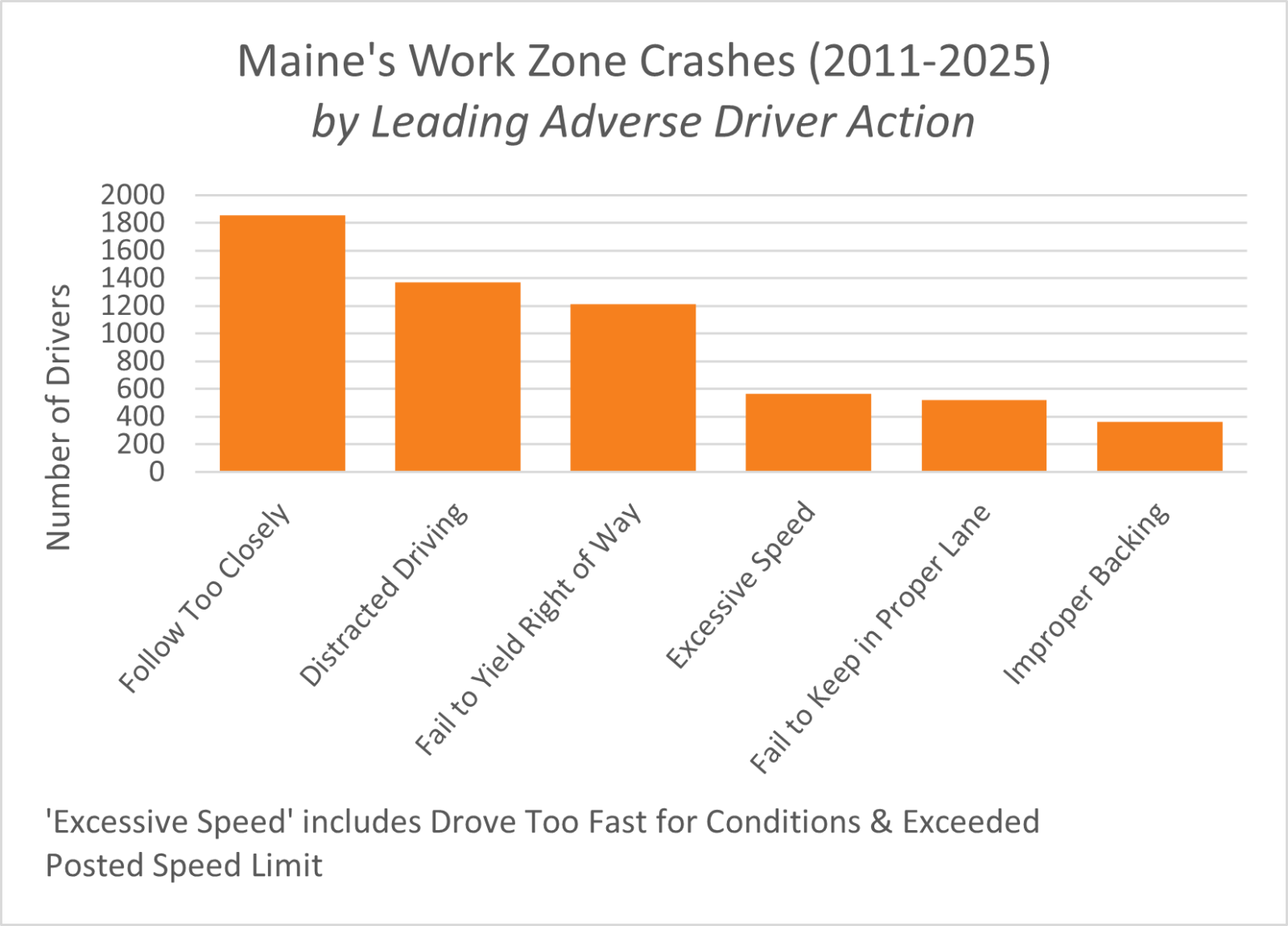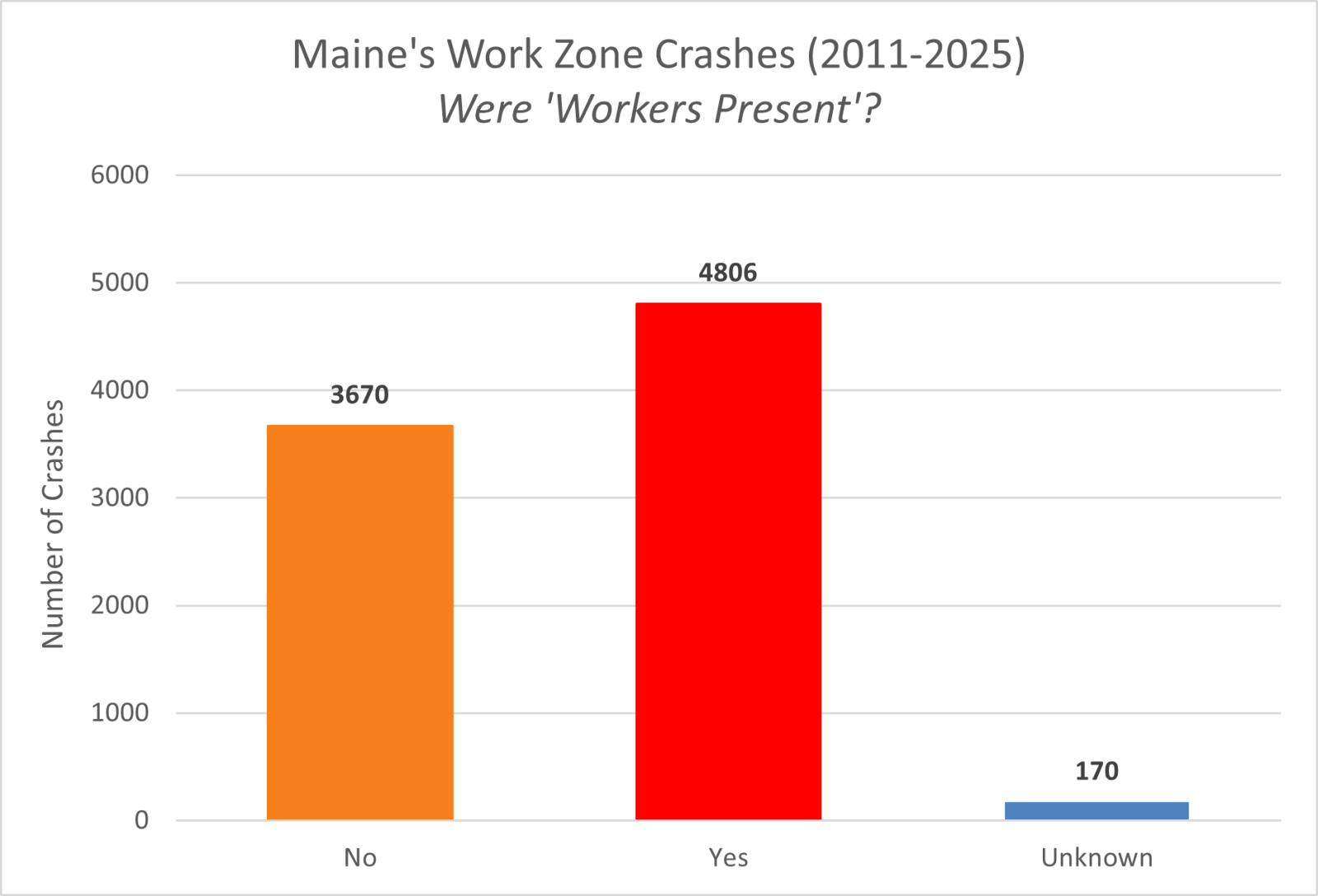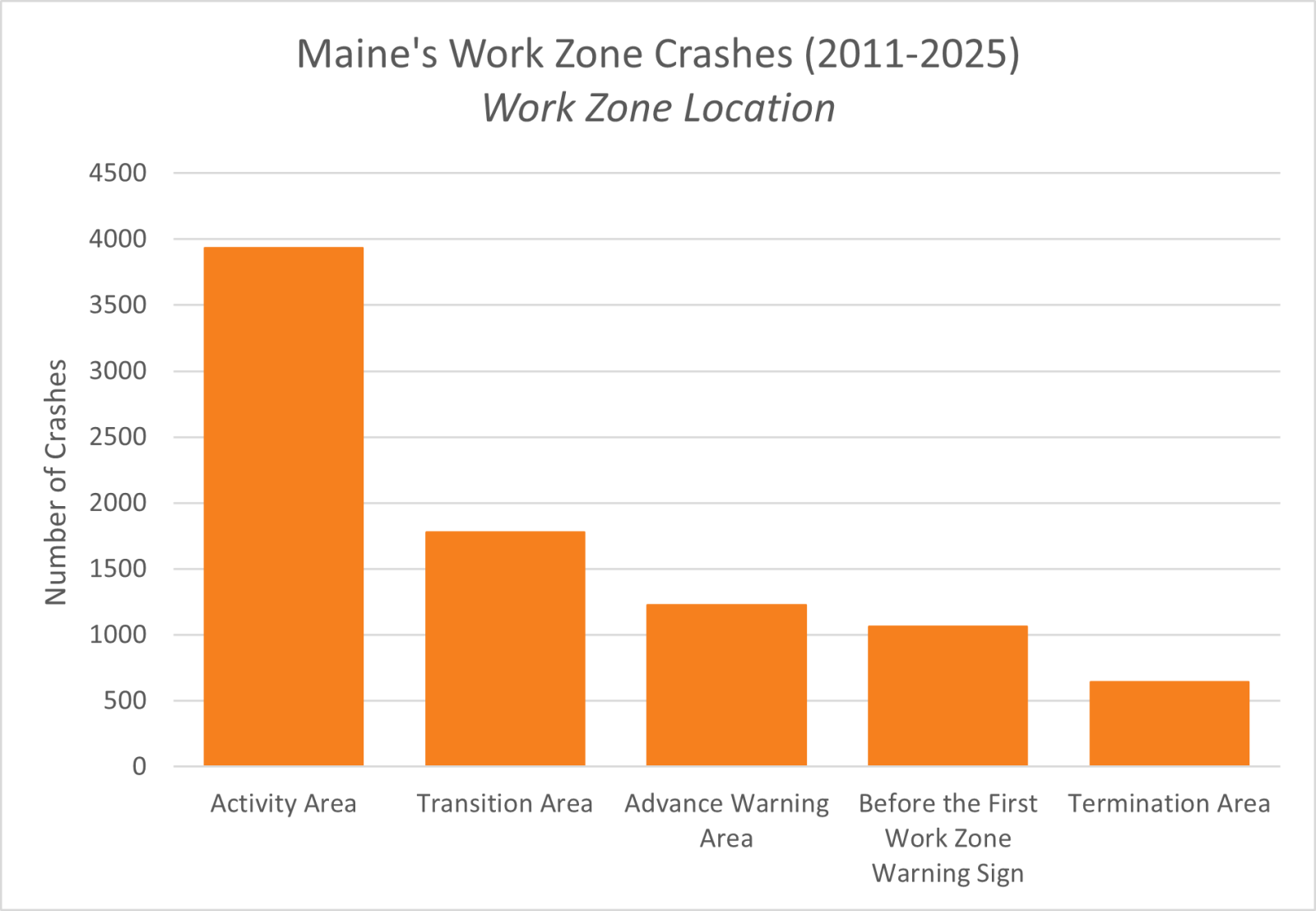
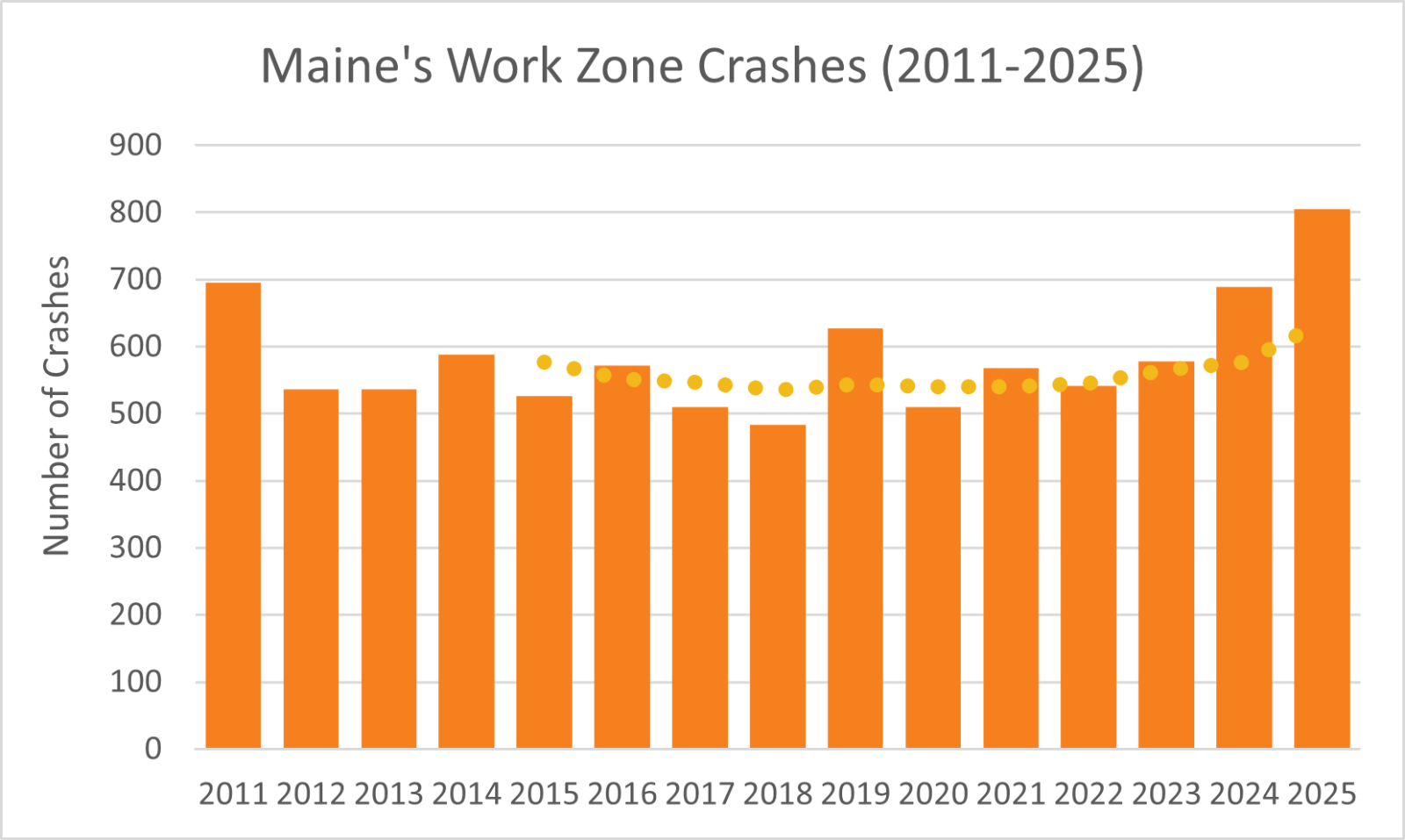
An average of nearly 600 crashes occur each year in Maine work zones, resulting in several fatalities. Another 200 are injured. Workers in these areas are vulnerable to serious injury, as are vehicle occupants.
What can you do to keep Work Zones safe?
- Slow down - drive at the posted work zone speed.
- Pay attention.
- Merge as soon as safely possible when required.
- Maintain a safe following distance.
- Stay calm and be patient if there are traffic delays.
- Remember to always wear your safety belt.
National Work Zone Awareness Week 2026 | Downloadable Poster (JPG)

National Work Zone Awareness Week (NWZAW) is an annual spring campaign timed with the start of roadway construction season to promote safe driving through highway and street work zones. It brings together transportation agencies, contractors, law enforcement, and communities to highlight the deadly consequences of speeding, distraction, and impatience in work areas.
Work zones are high‑risk environments where drivers, passengers, and roadway workers are all vulnerable to crashes caused by inattention and unsafe speeds. Most people killed in work zone crashes are actually motorists and their passengers, which makes driver behavior a critical focus of the campaign.
The theme “Safe Actions Save Lives” emphasizes the idea that everyday choices behind the wheel—slowing down, putting the phone away, obeying flaggers and signs—directly determine whether everyone gets home safely. It reinforces that safety is shared: both drivers and workers have a role in preventing tragedies in work zones.
The core message of NWZAW is for drivers to use extra caution whenever they approach and travel through a work zone. That includes staying alert, following posted work zone speed limits, leaving extra space between vehicles, and being prepared for sudden stops, lane shifts, or workers and equipment close to traffic.
Throughout the week, organizations host safety trainings, public events, and outreach activities to keep work zone safety visible and memorable. Signature efforts often include a national kickoff event, a “Go Orange Day” where people wear orange to honor victims, social media campaigns using #NWZAW, and moments of silence for those killed in work zone incidents. Maine is set to Go Orange on Wednesday, April 22nd. Use the hashtag #GoOrangeDay to show your support.
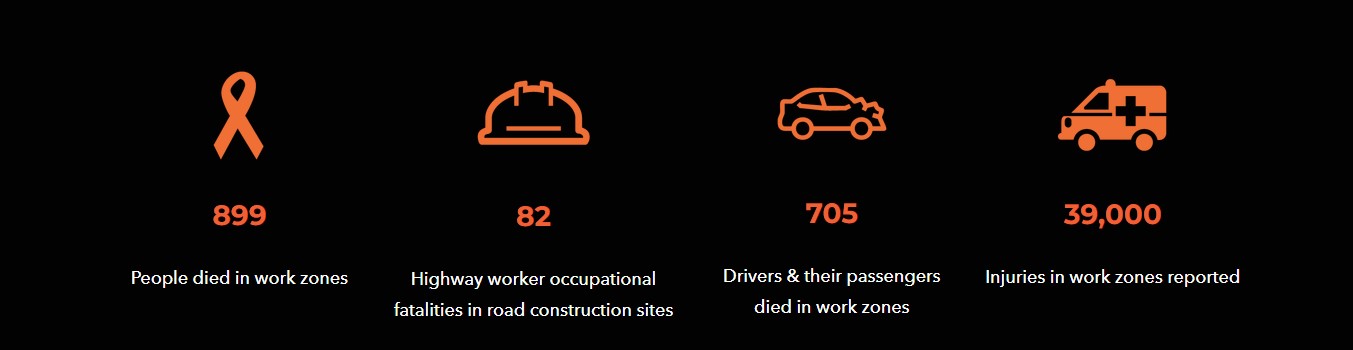
In 2023, 899 people died in work zones, according to the NHTSA FARS data. Also in 2023, 82 highway worker occupational fatalities occurred in road construction sites, based on BLS data.
MaineDOT: Looking to attain ZERO Work Zone Fatalities every year
Employees working in work zones are continually exposed to distracted drivers and drivers traveling at high speeds. MaineDOT is concerned about the exposure that our vulnerable employees and contractors face on a daily basis. The department promotes awareness of this issue throughout the year. Improving work zone safety is critical to our mission and goals and MaineDOT includes a statewide capstone that measures the number of crashes, injuries and fatalities in work zones.
MaineDOT Work Zone Safety Videos
Work Zone Safety Information
There are hundreds of work zones in Maine each year, ranging from short-term activities such as work on utility lines, tree trimming, mowing and ditch clearing, to longer term road reconstruction projects. Although most large projects are done when the weather is warm, work might be under way along the road anytime of the year. Work zones can be found anywhere - on the Interstate, at bridges on hundreds of highways and secondary roads, and on local streets.
Watch for orange-colored signs that warn of upcoming work zones. Work zones all have one thing in common – they require travelers to be extra careful – to Slow Down and Pay Attention. MaineDOT wants everyone to be safe in work zones. That takes all of us - MaineDOT employees, contractors and others working along Maine roads and the driver. Let’s work together to keep each other safe.
- Work Zone Crash Trends
Crash Trends
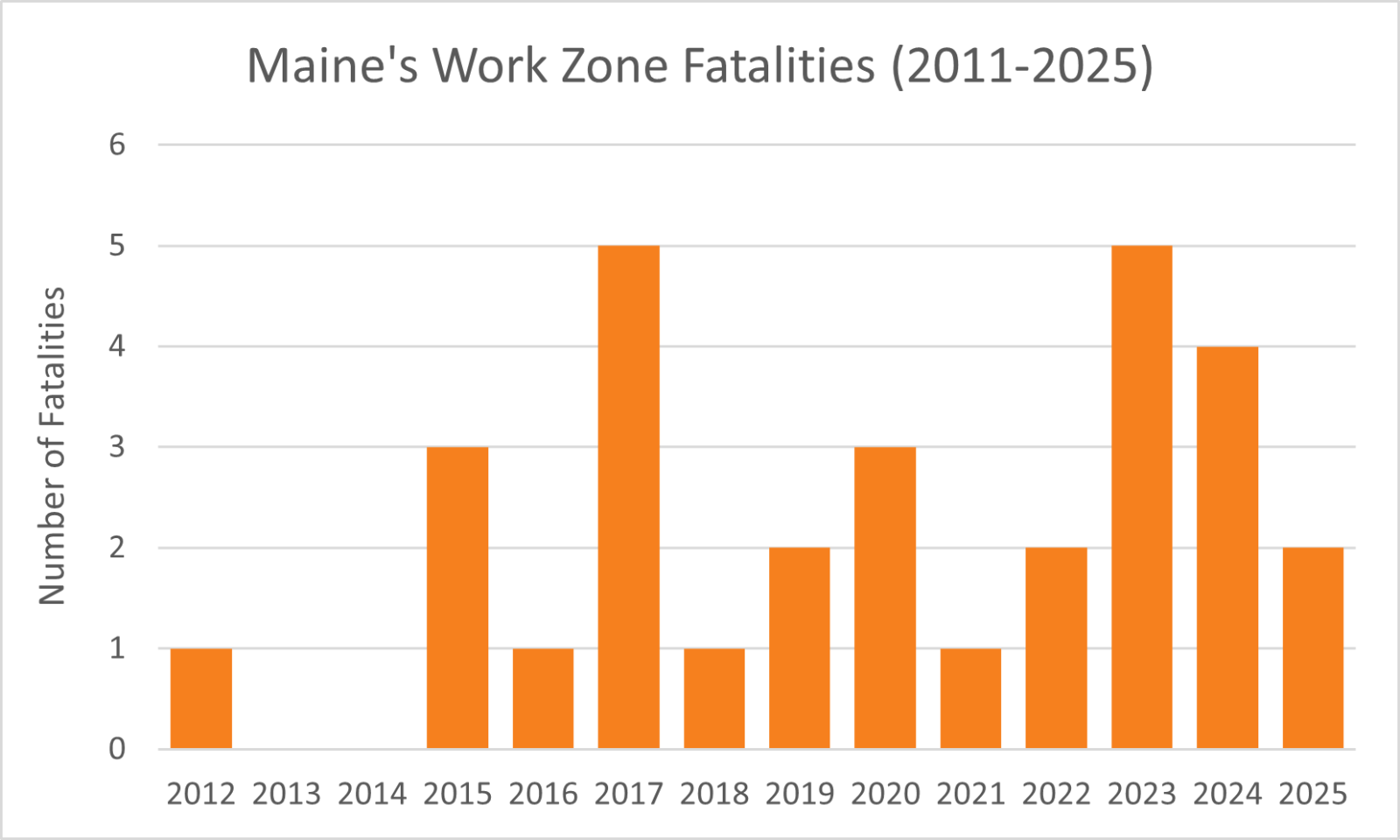
- Between 2011 and 2025, 30 people were killed in crashes in Maine work areas.
- In 2022 alone, there were 541 crashes in Maine work zones involving approximately 1200 people and resulting in 2 fatalities and 164 injuries.
Work Zone Crash Trends - Graphs (2011-2025)
Contributing Factors