
DACF Home → PFAS → Fund To Address PFAS Contamination → PFAS Fund: Research and Grant Opportunities
PFAS Fund: Research and Grant Opportunities
On this page:
Introduction to the PFAS Fund's Research Initiatives
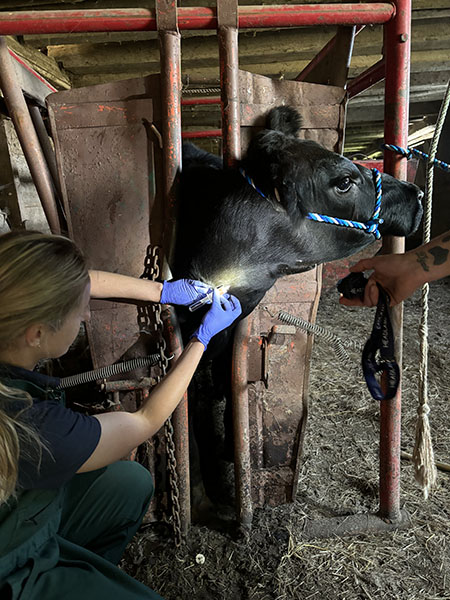
The Fund to Address PFAS Contamination will support research that allows farmers to make informed decisions about how to adjust their operations upon the discovery of PFAS contamination by:
- Establishing a competitive research grant program to support scientific research,
- Exploring the possibility of establishing a research station on a property purchased by the PFAS Fund, and
- Compiling and sharing scientific information that results from the competitive research grant program.
Research Grant Program
The intent of the research grant program is to fund research that helps farmers determine their best options for maintaining and enhancing viability despite the presence of PFAS on their property.
There are two grant categories:
- Major Grants between $100,000 and $500,000 to support multi-year research projects
- Targeted Grants of less than $100,000 for projects that are smaller in scope and duration
Open Requests for Applications
Targeted Grants, Round 1
RFA #PFNDT2025001, Targeted Grants for the Study of PFAS in Agricultural Systems, Round 1 (PDF) is now open. Multiple projects will be funded, with a value of less than $100,000 each.
This grant funding will support research to help commercial farmers make informed decisions about utilizing agricultural property impacted by PFAS. Applicants are encouraged to submit applications that address a targeted research question or a research priority.
Responses to questions submitted by researchers (PDF)
| DATE | ITEM |
|---|---|
| October 1, 2025 | Call for pre-proposals opens via online form |
| October 16, 2025 | Information session at 3:30 PM EST Join Info Session on Microsoft Teams |
| November 10, 2025 | Call for pre-proposals closes at 11:59 PM EST |
| November 21, 2025 | Pre-proposal assessment forms sent to applicants |
| December 10, 2025 | Questions on the full proposal due to RFA Coordinator |
| December 22, 2025 | Responses to researcher questions posted online |
| February 13, 2026 | Complete applications due by 11:59 PM EST |
| May 8, 2026 | Anticipated notification date of project award decisions |
| Upon Signed Contract | Funding committed; period of performance defined in proposal begins |
| 12 to 18 months post-award | The period of performance closes |
Targeted Research Questions
- Movement of PFAS from contaminated agricultural materials (e.g., manure, hay or other plant materials, carcasses, discarded milk) to water or soil
- Remediation or disposal options for PFAS-contaminated agricultural materials
- Markets for contaminated hay: How much PFAS is transferred from contaminated hay to soil? What levels and types of PFAS in hay would be safe for use as mulch for gardens or silt barriers for construction projects? Would the revenue from such uses be sufficient to keep pastures in hay?
- Horses and horse manure: To what extent do PFAS accumulate in horses, horse manure, and soil when PFAS-contaminated hay is the primary food source for horses? How does this vary by the amount of PFAS in the hay? Proposals might include markers of horse health and/or assessment of possible transfer pathways from horse manure to plants or chickens.
- Food sources for pigs: Which PFAS soil levels are appropriate for producing feed for pigs? How does this vary by feed type?
- Livestock correlation studies: the correlation between PFAS in more readily sampled media (including blood, milk, eggs, or ear punches) and in muscle or organ tissue. Researchers are encouraged to submit a proposal for a specific understudied type of livestock.
- Communication strategies for impacted producers: Consumers are encouraged to ask farmers about PFAS and farmers are encouraged to inform their customers about the presence of PFAS compounds in their farm's soil. How are impacted producers navigating this communication? How can producers effectively communicate about technical topics such as action levels for food products, the nuances of low-level PFAS exposure through food, or the presence of their farm on the DEP PFAS investigation map? Proposals might include interviews with producers and/or the development and testing of materials in collaboration with producers, ideally bringing together the academic literature on risk communication and the challenges identified by impacted producers.
- Christmas trees as an alternative agricultural product: How much PFAS is taken up into trees and needles? How does this vary by maturity – e.g., how much will have accumulated by typical harvest time? Would there be health risks to young children if a Christmas tree sheds needles in a home? Would there be health or environmental risks if a Christmas tree grown on a PFAS-impacted field is fed to goats or used as a substrate for seeding clam beds? How would this vary according to the level of PFAS in the field where the Christmas trees are grown?
- Pollinators: To what extent are PFAS accumulating in pollinators, pollinator food sources, hives, and honey? How does accumulation vary by level of contamination in soil and surface water and by hive distance from sources of contamination? Proposals might also include assessment of pollinator and hive health.
- Questions based on research priorities: Researchers may also propose other research questions that will: address one of the PFAS Fund’s identified research priorities (see Major Grants, Round 2 below and the full Targeted Grants RFA), benefit Maine farm viability, fill a gap in the literature, and are answerable through a research project of less than 18 months duration and under $100,000 in funding. These proposals may include extension of a current research project or a pilot study that would provide preliminary data necessary for developing a larger study.
Major Grants, Round 2
RFA #PFNDM2025002, Major Grants for the Study of PFAS in Agricultural Systems, Round 2 is now open. Multiple projects will be funded, with a minimum value of $100,000 and a maximum value of $500,000 each.
This grant funding will support research to help commercial farmers make informed decisions about utilizing agricultural property impacted by PFAS. Applicants are encouraged to submit applications that address a research priority.
Responses to questions submitted by researchers (PDF)
| DATE | ITEM |
|---|---|
| October 1, 2025 | Call for pre-proposals opens via online form |
| October 16, 2025 | Information session at 3:30 PM EST Join Info Session on Microsoft Teams |
| November 10, 2025 | Call for pre-proposals closes at 11:59 PM EST |
| November 21, 2025 | Pre-proposal assessment forms sent to applicants |
| December 10, 2025 | Questions on the full proposal due to RFA Coordinator |
| December 22, 2025 | Responses to researcher questions posted online |
| February 13, 2026 | Complete applications due by 11:59 PM EST |
| May 8, 2026 | Anticipated notification date of project award decisions |
| Upon Signed Contract | Funding committed; period of performance defined in proposal begins |
| 24 months post-award | The period of performance closes |
Research Priorities
Priority 1: PFAS in Agricultural Settings: Soil, Water, and Plant Studies
This category examines the fate and transport of PFAS in agricultural soil, water, and crop systems. Topics include, but are not limited to:
- Studies related to the influence of soil properties on PFAS contamination, including residence time and modeling;
- Changes in PFAS levels in soil over time; how different variables influence the rate of change;
- PFAS sorption and transport kinetics in soil;
- Irrigation-based PFAS migration pathways through soil-water systems;
- PFAS transfer factors (also known as bioconcentration factors) such as transfer from:
- irrigation water to soil,
- soil to groundwater, and
- soil or water to crops consumed or utilized by animals or humans (e.g., vegetables, fruits, forage, grain, or specialty crops such as Christmas trees).
Priority 2: PFAS in Agricultural Settings: Animal and Animal Product Studies
This category includes research to broaden the understanding of PFAS uptake and movement through livestock and poultry and their fate in animal products (e.g., milk, eggs, meat).
Topics include, but are not limited to:
- Predictive models for soil to forage crop to livestock to food commodity pathways;
- Livestock and poultry transfer/bioconcentration factors and factors that affect them (e.g., forage/feed transfer factor for meat/milk/eggs, how transfer factors change seasonally);
- Livestock correlation studies (e.g., the correlation between PFAS in more readily sampled media, including blood, milk, eggs, or ear punches, and muscle or organ tissue);
- Livestock and poultry elimination kinetics studies;
- Influence of feed additives/binders on PFAS levels in animals and animal products;
- Accumulation of PFAS in various value-added dairy products (e.g., cream, yogurt, butter, cheese, etc.); and
- Pollinators: bioaccumulation of PFAS in pollen and nectar; assessment of pollinator and hive health; assessment of potential impact on crops that require pollination (e.g., blueberries)
Priority 3: Understanding and Managing PFAS on the Farm
This category includes research designed to 1) enhance the management and understanding of PFAS in agricultural settings and 2) develop tools to increase the speed and reliability of on-farm management decisions related to PFAS contamination.
Topics include, but are not limited to:
- Development of decision support tools (e.g., when it is safe to return farm products to the market? When can animals be safely released for slaughter post-depuration?);
- Soil management strategies and their relative effectiveness in reducing the impact of PFAS contamination (e.g., till versus no-till);
- On-field crop management strategies to reduce PFAS (e.g., harvest timing, forage species selection, pasturing strategies);
- Post-harvest investigations of how PFAS levels change throughout the life cycle of forage crops, from harvesting in the field to storage, and potential management practices related to those changes
- Alternative crop production potential on PFAS-contaminated land (e.g., grains, maple syrup, Christmas trees);
- Risks and benefits of animal fiber production on PFAS-impacted land;
- Use of biomass from impacted fields (e.g., construction, textiles, mulch); and,
- Treatment and/or low-risk disposal methods for PFAS-contaminated byproducts (biomass, manure, carcasses, milk, compost).
Funded Studies
In Spring 2025, the following projects were awarded funding under RFA #PFNDM2024001, Major Grants for the Study of PFAS in Agricultural Systems, Round 1.
Caleb Goossen, Maine Organic Farmers and Gardeners Association, Fractional Loading and Occurrence of Airborne Transfer of PFAS (FLOAT), $213,505
This study examines how PFAS present in agricultural soils become airborne during tillage events. Contaminants are often concentrated in fine soil particles, which can be lifted into the air as dust, potentially impacting environmental and human health. To understand this process, soil samples from multiple fields will be analyzed to determine how PFAS are distributed across different soil particle sizes. At one site, dust will be collected before, during, and after a field preparation to assess how much and how far contaminants travel. The results will help identify which soil components pose the highest risk for airborne transport and how their PFAS levels can be used to predict potential dust contamination. Findings from this study will provide valuable insights for farmers, researchers, and policymakers working to mitigate the risks of airborne soil contaminants in agricultural settings.
Ling Li, University of Maine, Effects of Biochar Aging, Application Ratio, and Low-Cost Modification on Reducing PFAS Uptake by Vegetables: Laboratory and Field Studies, $467,240
This project aims to investigate whether biochar can be used as a soil amendment to immobilize PFAS in the soil and reduce its bioaccumulation in the edible parts of vegetable crops, such as lettuce and tomatoes. The study will address several key questions: the optimal application rate of biochar in the soil, the frequency with which additional biochar should be applied after the initial amendment, and low-cost modification techniques to enhance biochar's ability to adsorb short-chain PFAS from the soil. This research will involve both laboratory and field studies. The findings will contribute to developing practical guidelines for farmers on the use of biochar in PFAS-affected soils.
Ellen Mallory, University of Maine, Evaluating precursor transformation contributions to plant PFOS uptake and bioaccumulation, $499,995
Plant uptake from contaminated soils is a major way PFAS compounds enter our food systems. In the case of milk and meat, there is particular concern about uptake of perfluorooctane sulfonic acid (PFOS) by forage crops due to the prevalence and toxicity of PFOS. Being able to accurately predict how much PFOS moves from soil to plants to animals is critical for assessing risk and developing mitigation strategies, but one major factor complicating those predictions is that PFOS, like some other PFAS compounds, can be created through the transformation of "precursor" compounds. Concentrations of these PFOS precursors can vary widely from field to field and could be contributing to the high variability of plant PFOS uptake rates that have been observed. We will conduct paired greenhouse and field studies to assess whether PFOS precursor compounds in soil influence PFOS uptake rates from soil to grass, and to what extent.
Sharmila M. Mukhopadhyay, University of Maine, Rapid Detection and Monitoring of PFAS in Water and Solids, $496,432
One of the first steps in understanding how to manage PFAS on the farm is timely detection. Currently, this first step is burdensome for farms due to the slow turnaround time and high cost of analytical testing. Typically, it takes over a week to obtain test results at a cost of $200-$400 per sample, with multiple samples needed for each study. This proposed research will address this challenge by developing and demonstrating portable electrochemical sensors that can be used for rapid, on-site, and inexpensive testing. These user-friendly devices can be operated by farmers to obtain quick in-house results and determine the level of PFAS in different samples at different locations and times, hence obtaining a better understanding of the contamination issue for a timely response.
Glenda Pereira Parente, University of Maine, Evaluating PFAS Bioaccumulation and Depuration in Dairy Sheep and Lambs: Using Insights from Pharmacokinetic Modeling to Develop Mitigation Strategies, $499,989
The research team seeks to develop strategies to reduce PFAS contamination in livestock animals, which will help protect agricultural integrity, public health, and animal welfare. This study will be conducted on ewes from an already awarded EPA grant, but adding additional samples to model the kinetics of PFAS bioaccumulation and depuration, as well as being able to sample during an entire lactation (beyond 81 days in milk). The first objective will focus on how PFAS moves through the animal's body during gestation, lactation, and depuration (cleaning) after being fed clean feed. The results will guide regulatory measures for PFAS contamination and its impact on animal products such as milk, meat, and eggs. The second objective examines the effects of feeding management practices during the weaning phase. The research will explore how early-life exposure to PFAS affects bioaccumulation of PFAS in animals and the potential for reducing contamination through clean milk replacers.
Elsie Sunderland, Harvard University, Understanding and Managing the Transfer of Diverse PFAS in Biosolids Impacted Soils to Poultry and Eggs, $500,000 (conditional award)
This project will examine how per- and polyfluoroalkyl substances (PFAS) on two biosolids-contaminated farms in Maine are transferred to poultry and eggs. We will consider exposures through direct consumption of contaminated soil, insects, earthworms, and airborne dust particles. We will monitor seasonal changes in eggs and test the effectiveness of different coop setup interventions (location changes, dust minimization, platforms, soil barriers) for minimizing PFAS exposure. Data will be used to provide advice for farmers for minimizing PFAS contamination in chickens and eggs and to develop soil screening values protective of public health.
Xiaoxiao Zhao, University of Maine, Energy-efficient PFAS immobilization and degradation in soil using non-thermal plasma electrodes coated with activated carbon, $284,869
Current PFAS cleanup methods are costly, energy-intensive, fail to fully remove PFAS, damage soil fertility, and create additional environmental waste. This project will use activated carbon coated on a plasma electrode to capture PFAS from soil. After capturing sufficient PFAS onto activated carbon, plasma will be activated to break down the PFAS molecules and refresh the activated carbon. By periodically activating plasma, this method not only destroys the PFAS but also refreshes the carbon's ability to capture PFAS. This approach is expected to deliver key benefits: 1) energy efficiency, by using non-thermal and low-power plasma reactions; 2) long-term effectiveness, by fully breaking down PFAS instead of just trapping them; 3) soil fertility and safety, by avoiding harmful soil disruption and generating nutritious nitrogen species; and 4) sustainability, by reducing waste by periodically refresh activated carbon.
In Spring 2026, the following projects were awarded funding under RFA #PFNDM2025002, Major Grants for the Study of PFAS in Agricultural Systems, Round 2.
Celia Chen, Dartmouth College, Maple Sugaring as a Mode of Alternative Crop Production on PFAS-Contaminated Land: Challenges and Opportunities, $499,602
Summary: Can sap from maple trees growing on land contaminated with “forever chemicals” (PFAS) be used to make food-safe maple syrup? To answer this question, researchers will work with Maine farmers, community members, and local groups to collaboratively choose ten contaminated sites from across the state, then collect soil and sap from 100 maple trees. Lab tests will measure how much PFAS moves from soil into sap and what happens to those chemicals during the syrup-making process. Filtration experiments will determine if it is possible to remove contamination from sap and/or syrup, and make a food-safe product. At the same time, social scientists will interview and survey farmers to learn about their experiences with maple sugaring and their knowledge of PFAS, and to identify what resources they would need to adopt or intensify PFAS-informed maple sugaring operations. The team will share findings in three open-access scientific papers, a farmer-focused guide, and an interactive website. Together, the results from this research will help determine if maple sugaring could be an effective way to make productive use of lands that are unsuitable for other types of agricultural because of previous contamination.
Philip Fanning, University of Maine, PFAS Bioaccumulation in Floral Rewards: Evaluating the Consequences for Bee Pollinators and the Environment, $498,719
Summary: PFAS, or "forever chemicals", are widespread across Maine landscapes, including farms. Plants grown in contaminated soil can result in the uptake of PFAS into plants, from roots to flowers. Given the toxic effects of PFAS, animals that consume plants and plant products grown in contaminated landscapes can result in negative health repercussions. Bee pollinators, which provide pollination services to many flowering plants and crops, rely on pollen from flowers for their diets. Thus, the presence of PFAS across Maine landscapes may negatively impact the health and productivity of bee pollinators. However, no research has been done in Maine to investigate the consequences of PFAS for bees, limiting our understanding of how bees and agricultural producers may be affected in contaminated landscapes. To address this, we aim to evaluate the presence of PFAS in bee-collected pollen, identify flowering plants associated with higher PFAS concentrations, and characterize pollinator-specific responses to PFAS exposure.
Linda S Lee, Purdue University, Field-level Efficacy and Longevity of High-carbon Sorbent Incorporation into Soil for Reduced PFAS, $472,754
Summary: Many farms in Maine have been adversely impacted by the discovery of per-and polyfluoroalkyl substances (PFAS) at elevated levels in soil, water and agricultural products. The main goal of the proposed is to investigate if the incorporation of locally available carbon-based biosorbents into heavily PFAS-contaminated agricultural fields will reduce PFAS uptake by feed grasses and corn plants. Results will also help to evaluate if the effectiveness of these high-carbon amendments support modified soil screening levels for safe food production. We will be conducting field trials with two Maine-relevant crops on two PFAS-impacted Maine farms at an operationally relevant scale, complemented with mathematical modeling studies that incorporate climate patterns and soil type, which will extend our ability to predict effectiveness of these high carbon particles at other sites. Results from this project will help Maine farms with PFAS contamination of all levels to continue to keep agricultural land productive.
Jean D MacRae, University of Maine, High Temperature Treatment of PFAS-Contaminated Plant Residues, and the Effects of Char on Mobility of PFAS from Manure-Char Mixtures, $445,780
Summary: The purpose of this research is to develop two methods to manage PFAS on contaminated farms. The first is a longer-term strategy to identify the operating conditions required to destroy PFAS in contaminated plant material using pyrolysis or hydrothermal treatment. Both methods involve high temperature and have been shown to destroy PFAS under certain conditions. PFAS destruction is needed to break the contamination cycle on farms, and reduce concentrations over time. The second method is to reduce the risk that PFAS will migrate off the site or into water. This method involves mixing the solid product of high temperature treatment of organics (char) with contaminated manure to prevent leaching of PFAS into water. Different experimental conditions will be tested to find the right char types and amounts to immobilize PFAS. The effects of UV light, fungi and freezing on immobilization will also be tested.
Jessica Cristina Lemos Motta, University of Maine, Assessing the Effects of PFAS Contamination on Reproductive Function and Embryo Development in Livestock, $499,615
Summary: Per- and polyfluoroalkyl substances (PFAS) are man-made chemicals that persist in the environment and can contaminate water and land, affecting livestock and potentially human health. This project will study how PFAS exposure affects female reproduction in sheep. Ten ewes will be exposed to a combination of PFAS or remain unexposed, and researchers will monitor their hormone levels, ovarian function, and then the number and quality of embryos produced. Blood and reproductive tissues will be tested to confirm PFAS exposure and assess its effects at a molecular level. The results will help us understand how PFAS disrupts fertility and embryo development in livestock. This knowledge can guide farmers whose operations are affected by PFAS contamination, and may provide alternative strategies, such as in vivo embryo production, to maintain productivity while protecting animal and human health.
Eguono Omagamre, University of Maryland Eastern Shore (UMES), Soil-Specific Strategies for Managing PFAS in Maine Agriculture: Integrating Amendments, Seasonal/Management Dynamics, $499,328
Summary: PFAS contamination in farmland has created serious challenges for Maine farmers, especially on fields where biosolids were applied in the past. Biochar, a carbon-rich soil amendment, has shown promise in reducing how much PFAS moves from soil into crops. However, results have been inconsistent, and farmers need clearer answers about when and how biochar is likely to work. This project will study how biochar affects PFAS uptake in different Maine soils. We will test how soil type, water conditions, and common farm management practices influence whether biochar reduces PFAS movement into forage crops that may be fed to livestock. The goal is to provide practical, science-based guidance to help farmers understand whether biochar can lower PFAS risk on their specific fields. Results will be shared through simple soil guidance tables and an easy-to-use online tool.
In Spring 2026, the following projects were awarded funding under RFA #PFNDT2025001, Targeted Grants for the Study of PFAS in Agricultural Systems, Round 1.
Christoph Aeppli, Bigelow Laboratory for Ocean Sciences, Improving Soil Tests to Better Predict Plant-Available PFAS and Amendment Effects, $99,931
Summary: Some Maine farm soils contain PFAS (“forever chemicals”), but current soil tests measure the total amount of PFAS in soil without showing how much can actually be taken up by crops. This makes it difficult for farmers and regulators to understand whether a given soil concentration poses a real risk to food safety. This project will test different soil extraction methods to determine which ones best estimate the portion of PFAS that plants can access during a growing season. We will grow lettuce in greenhouse pots using four Maine soils and compare PFAS levels in the plants to PFAS measured in the soils using different testing approaches. We will also study how soil amendments, such as manure and high-carbon ash, affect PFAS mobility and plant uptake. The results will help improve how soil PFAS test results are interpreted and provide more practical, science-based guidance for managing PFAS in Maine agriculture
Thomas Simones, Maine Center for Disease Control and Prevention, Establishing a PFDA Volume of Distribution to Refine Predictive Modeling for the Soil to Forage Crop to Beef Cattle Pathway, $51,159
Summary: Perfluorooctane sulfonic acid (PFOS) and perfluorodecanoic acid (PFDA) are PFAS chemicals that move from contaminated soil to hay to beef cattle, creating potential risks for food safety. A model has been developed to predict the daily build-up of PFAS in cattle from feed and water. However, PFDA predictions are uncertain because a key model input called the volume of distribution (Vd), which links the amount of a PFAS cattle consume to how much is in their blood and muscle, has never been directly measured for PFDA in cattle. This project will collect blood samples from cattle that have eaten contaminated hay for several months, and samples of their hay and water, to measure how PFAS moves into cattle. These data will be used to calculate a PFDA-specific Vd, confirm the current PFOS Vd, and provide improved predictions to help farmers make informed decisions for reducing PFAS contamination in beef.
Thomas Simones, Maine Center for Disease Control and Prevention, Focused Continuation of Understanding and Managing the Transfer of Diverse PFAS in Biosolids Impacted Soils to Poultry and Eggs, $99,623
Summary: PFAS have been found in the eggs of chickens raised on land where biosolids were historically spread, resulting in contaminated soil. In some cases, these levels have been high enough to raise public health concerns. Recently, a maximum allowable level for one PFAS in particular, perfluorooctane sulfonic acid (PFOS), in commercial eggs was established in Maine. However, it is still not well understood how PFAS move from soil through the environment and into chickens and eggs, making it difficult to offer guidance for farmers and homesteaders. This study will follow two groups of chickens from summer into early fall, one with exposure to PFAS-contaminated soil and one without. Throughout this time, grasses, insects, earthworms, and feed accessible to chickens will be sampled, along with their eggs, providing the necessary data to understand the different ways hens are exposed to PFAS and identify practical strategies to reduce PFAS in poultry products.
Connecting Researchers and PFAS-Impacted Producers
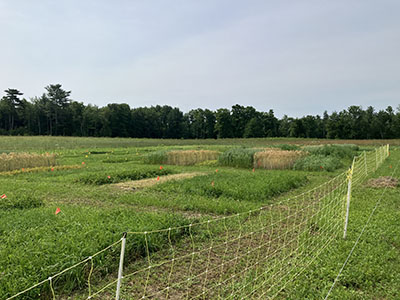
Researchers looking to collaborate with owners or managers of PFAS-impacted land periodically contact DACF. Their requests range from needing small volumes of PFAS-impacted soil to finding sites for test plots.
DACF facilitates connections by passing requests from researchers to agricultural producers who have indicated an interest in supporting PFAS research. DACF does not provide farmers' contact information directly to researchers.
DACF does not guarantee that a connection will be made; it is up to the producers to respond to requests submitted by researchers. Producers often receive multiple requests for research connections and may not have the capacity or interest in hosting research at the time a request is sent.
For Researchers
Are you looking for a site to conduct on-the-ground research or a source for impacted soil or other media? Researchers must fill out the Researcher/Impacted Producer Connection Request Form (PDF) and required attachments. Please send application to PFASFund.DACF@maine.gov.
Completed requests will be screened by the PFAS Fund for scientific merit and potential benefit to Maine agricultural producers. Approved requests will be shared with producers who have indicated to DACF that they are open to hosting research. DACF does not endorse or take a position on the research projects it shares with PFAS-impacted producers. It simply serves as a matchmaker.
Although not required, many researchers offer producers compensation for time and materials, access to test results and data, and the opportunity for owners or staff to participate in the research.
For Impacted Producers
Are you interested in hosting research on your PFAS-impacted property or otherwise supporting research? If you are open to receiving proposals from researchers, you can expect up to two emails per month with standardized requests and the relevant contact information. It is the producer's responsibility to respond directly to researchers.
Please contact PFASFund.DACF@maine.gov if you are an impacted farmer and would like to be added to the list of sites interested in hosting or supporting research.
Researcher Access to DACF Property
The Maine Department of Agriculture, Conservation and Forestry (DACF) owns properties impacted by contamination from per- and polyfluoroalkyl substances (PFAS). See a property inventory (PDF). Researchers may request access to a property or properties for research projects.
Researchers who are contemplating conducting research on DACF-owned property are encouraged to contact PFAS Fund staff at PFASFund.DACF@maine.gov as early as possible to determine whether there is availability and discuss their potential needs and timing. Communication should be initiated well in advance, as review of applications will take time.
If the preliminary discussion indicates that the property may be compatible with the research project, researchers should submit a Researcher Access to DACF-Owned Property Request Form (PDF) and required attachments. Applications will be reviewed quarterly, with application deadlines of February 1, May 1, August 1, and November 1.
Requests for access to DACF-owned property will be screened by the PFAS Fund to determine whether the request can be accommodated at one of the DACF-owned properties. If there is a suitable property, the research proposal will be reviewed by the PFAS Fund Research Advisory Panel for scientific merit and potential benefit to Maine agricultural producers. Proposals will be further vetted by the PFAS Fund’s Land Advisory Panel for consistency with stewardship objectives and to ensure an absence of conflicts with other uses of a given property. Once a project has been approved, the PFAS Fund will seek approval from the DEP’s Voluntary Response Action Program (VRAP)if the property is subject to an environmental covenant.
If a request is approved by both DACF and DEP, DACF will enter into an MOU, lease or license, or other agreement as applicable with the researcher, which will cover terms of use of the property and legal rights, and responsibilities and obligations, including insurance coverage.
Research Advisory Panel
The Commissioner of DACF established a Research Advisory Panel to recommend research priorities, shape the peer review process, and identify qualified peer reviewers. Panel members do not participate in the grant award selection process if they have a conflict of interest.
As of September 2025, the members of the panel are:
- Mary Yurlina, PhD, appointed as DACF representative by DACF Commissioner Amanda Beal
- Tim MacMillan, PE, appointed as DEP representative by DEP Commissioner Melanie Loyzim
- Eric Frohmberg, appointed as DHHS representative by DHHS Commissioner Sara Gagné-Holmes
- Dr. Angela Mech, PhD, appointed as University of Maine representative by President Joan Ferrini-Mundy
- Rick Kersbergen, MS, appointed by DACF Commissioner Amanda Beal as a member of the public with expertise in agriculturally related PFAS science
- Katia Holmes, Misty Brook Organic Farm, appointed by DACF Commissioner Amanda Beal as a member of the public representing the agricultural sector
- Beth Schiller, Dandylion Spring Farm, appointed by DACF Commissioner Amanda Beal as a member of the public representing the agricultural sector