
Quick Links to More COVID-19 Information


Symptoms
Signs and symptoms of COVID-19 are similar to influenza (flu) and include:

Cough

Headache

Shortness of breath or difficulty breathing

Sore throat

Fever or Chills

New loss of taste or smell

Fatigue

Congestion or runny nose

Muscle or body aches
Nausea or vomiting
Diarrhea
Symptoms may appear 2-14 days after exposure.
Most patients experience relatively mild symptoms and can recover at home. Some patients, like those with underlying medical conditions, may experience more severe respiratory illness. Learn more about COVID-19 symptoms.
Multisystem Inflammatory Syndrome in Children, MIS-C, is a serious but rare complication of COVID-19. It causes inflammation of certain body parts.
Prevent COVID-19
Core Prevention Strategies:

Stay up-to-date on immunizations.

Wash your hands often with soap and water for at least 20 seconds or use alcohol-based hand sanitizer.

Avoid touching your eyes, nose, and mouth with unwashed hands.

Cover your mouth and nose with a tissue when you cough or sneeze.
Clean frequently touched surfaces, like counters, handrails, and doorknobs.

Take steps for cleaner air.

Stay home if you are sick as much as possible. Avoid close contact with others.
Additional Prevention Strategies

Wear a face mask to protect yourself and others.

Avoid close contact with people who are sick.

Test for respiratory viruses if you feel sick to help you decide what to do next.
What to Do If You Are Sick
If you feel sick with COVID-like symptoms:
Stay home if you are sick as much as possible. Avoid close contact with others, including people you live with who are not sick.

Call your healthcare provider to discuss options.

If you have an emergency warning sign (including trouble breathing), get emergency medical care immediately.
Test for respiratory viruses to help you decide what to do next.
Is there a treatment for COVID-19?
Treatment is available for COVID-19 to help prevent severe disease. It works best if started early after symptoms start. Talk to a health care provider for more information.
How long should I stay home and away from others?
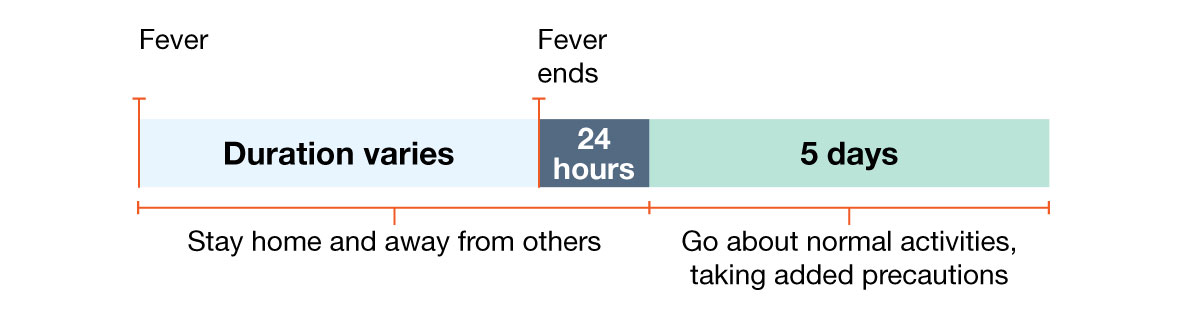
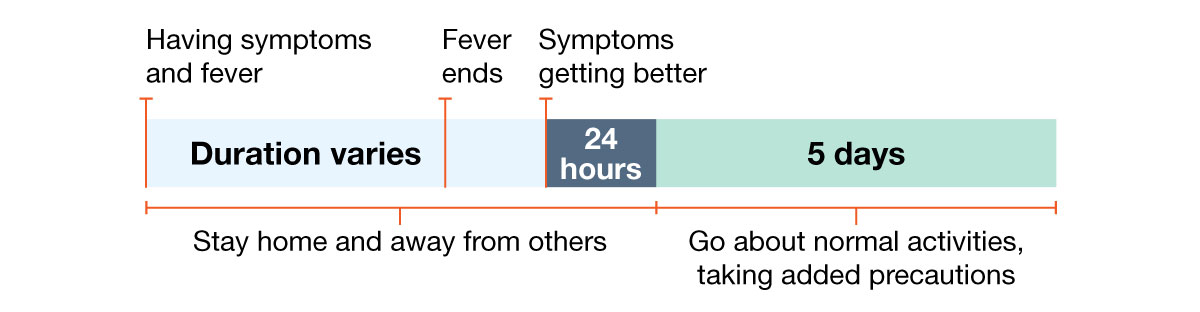
Go back to your normal activities when BOTH of these are true:
- Your symptoms are getting better overall for at least 24 hours, AND
- You have no fever for at least 24 hours (without using fever-reducing medication).
Even when you feel better, you might still be able to spread the virus that made you sick. Once you go back to normal activities, take these added steps for the next 5 days when you will be around other people:
Wash your hands often with soap and water for at least 20 seconds or use alcohol-based hand sanitizer.
Clean frequently touched surfaces, like counters, handrails, and doorknobs.
Take steps for cleaner air if you have to be around other people.
Wear a face mask around others.
Put extra space between yourself and other people.
Test for respiratory viruses if you have to be around others, especially people at risk for severe illness.
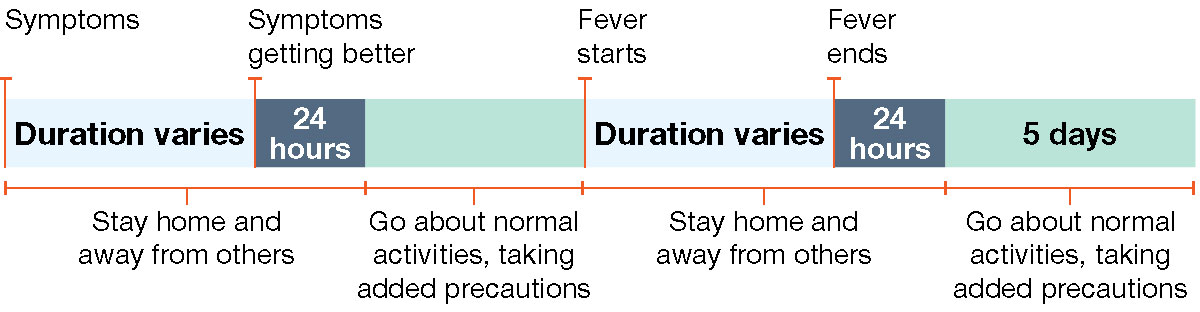
Remember, if you develop a fever or start to feel worse after you go back to normal activities, stay home and away from other people until you feel better and are fever free for 24 hours again.
If you are sick and live or work in a health care setting, there is different guidance for you to follow.
Examples:
Example 1: Person with fever and symptoms.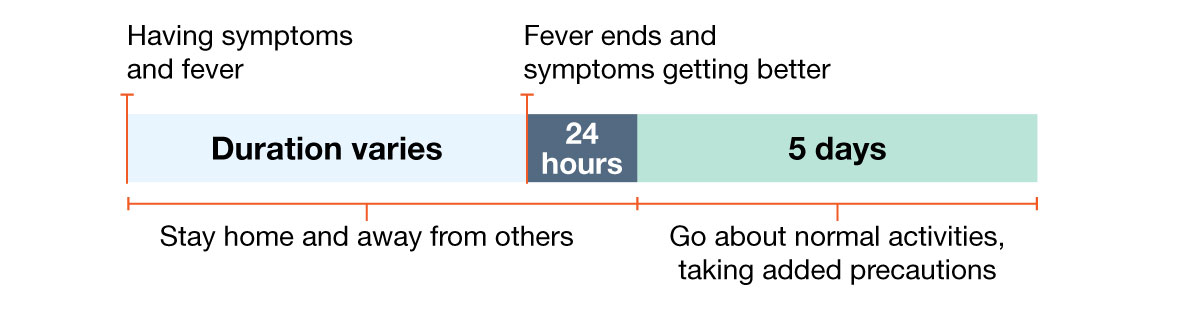
Example 2: Person with fever but no other symptoms.
Example 3: Person with fever and other symptoms. Fever ends but other symptoms take longer to improve.
Example 4: Person gets better and then gets a fever again.
COVID-19 Vaccination
For updated information on this year's COVID-19 vaccine and the Maine CDC Standing Order for Administration of 2025–2026 COVID-19 Vaccines (9/12/2025), visit maine.gov/covid19.
What is Long COVID?
Long COVID is a chronic condition that occurs after a COVID-19 infection and is present for at least 3 months. Long COVID can follow asymptomatic, mild, or severe COVID-19 infection. Some people have symptoms that come and go, while others have symptoms that persist.
For more information, view Long COVID: Clinician Information and Resources.
Resources
- COVID-19 Fact Sheet (PDF) | (PDF) عربي | Français (PDF) | Kreyòl Ayisyen (PDF) | ខ្មែរ (PDF) | Kiswahili (PDF) | Lingala (PDF) | Português (PDF) | русский (PDF) | 简体中文 (PDF) | Soomaali (PDF) | Español (PDF) | Tiếng Việt (PDF)
- U.S. CDC Infection Control Guidance for Health Care Providers
- U.S. CDC Protecting Against Infections in Early Care and Education Programs
- U.S. CDC Respirators and Mask Types and Performance
- COVID-19 Mythbusters Poster (PDF)
- COVID-19 Mythbusters: Vaccine Poster (PDF)
- COVID-19 Mythbusters: Back to School Poster (PDF)
- COVID-19 Mythbusters: Pregnancy Poster (PDF)