Powdery Mildew
Powdery mildews are caused by a variety of fungi, each specific to a host plant. It is recognizable by the patches of white fungal growth on the upper leaf surface. Commonly infected woody ornamentals include lilac, flowering dogwood, azalea, rose, and hydrangea. Flowering plants commonly infected include phlox, bee-balm, aster, yarrow, coreopsis, rudbeckia, begonia, chrysanthemum, dahlia, delphinium, snapdragon and zinnia. Since different fungi infect specific plants, it is not possible to spread from one species to another, for example, powdery mildew on phlox will not affect lilac.
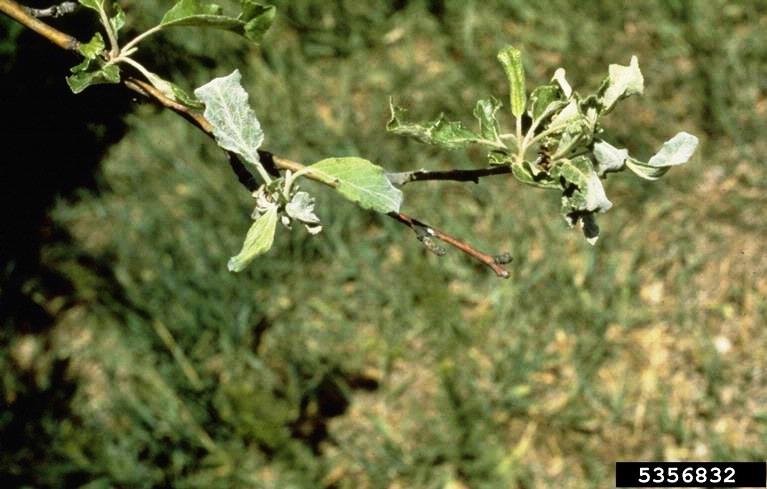
Powdery mildew on apple leaves.
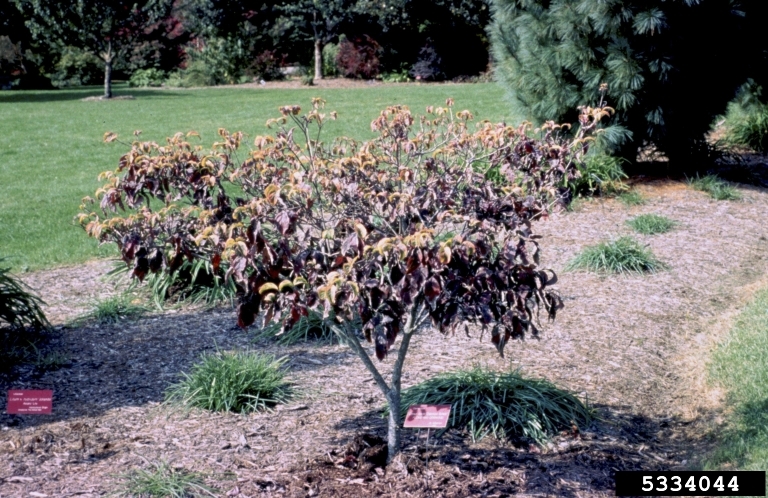
Powdery mildew on flowering dogwood.
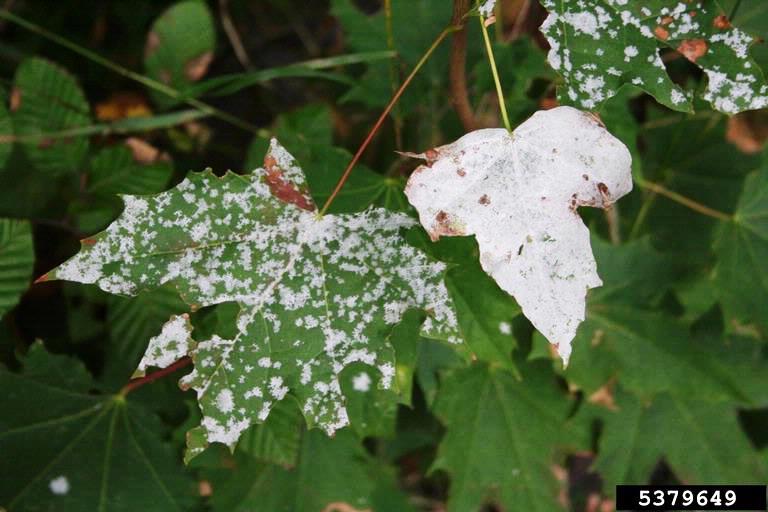
Norway maple with symptoms.
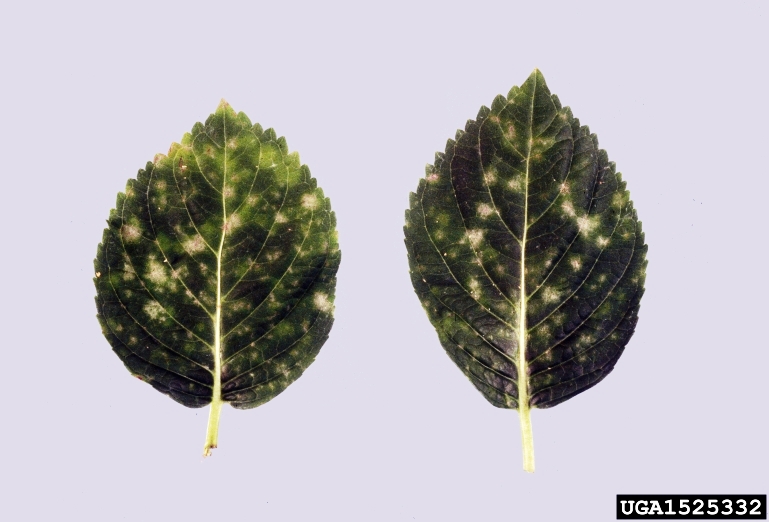
Hydrangea leaves showing powdery mildew symptoms.
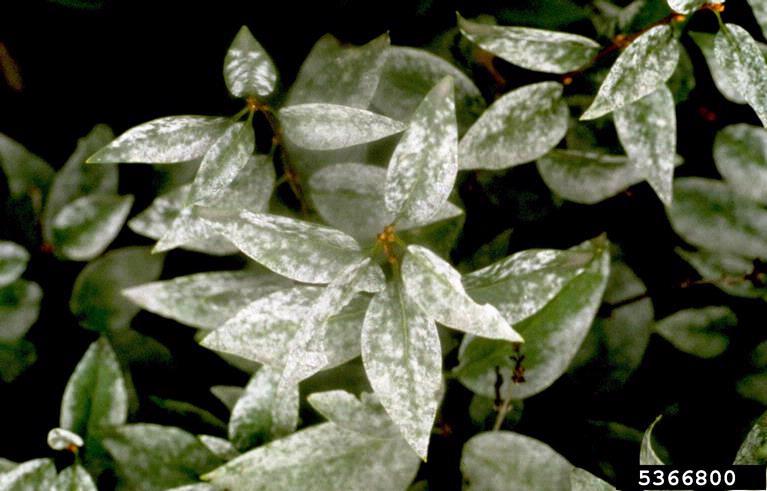
Powdery mildew on lilac.
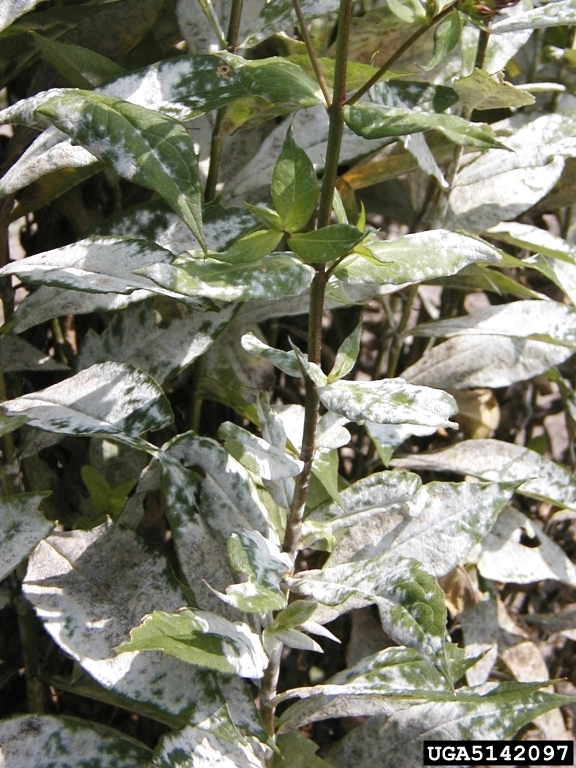
Powdery mildew on phlox.
Click on images to view full-size
Identification and Control Information
- Integrated Pest Management for Home Gardeners and Landscape Professionals: Powdery Mildew on Ornamentals[PDF]—University of California
- Fact Sheet with Symptoms and Control Options (PDF)—Colorado State University Extension
- Tips for Managing Powdery Mildew (PDF)—Maine Integrated Pest Management Council
More Information
- Factsheet: Powdery Mildew—Cornell University Greenhouse Horticulture
[Photos, left to right: William M. Brown Jr., Bugwood.org; Mary Ann Hansen, Virginia Polytechnic Institute and State University, Bugwood.org; Andrej Kunca, National Forest Centre - Slovakia, Bugwood.org; Department of Plant Pathology Archive, North Carolina State University, Bugwood.org; Whitney Cranshaw, Colorado State University, Bugwood.org; The Dow Gardens Archive, Dow Gardens, Bugwood.org]